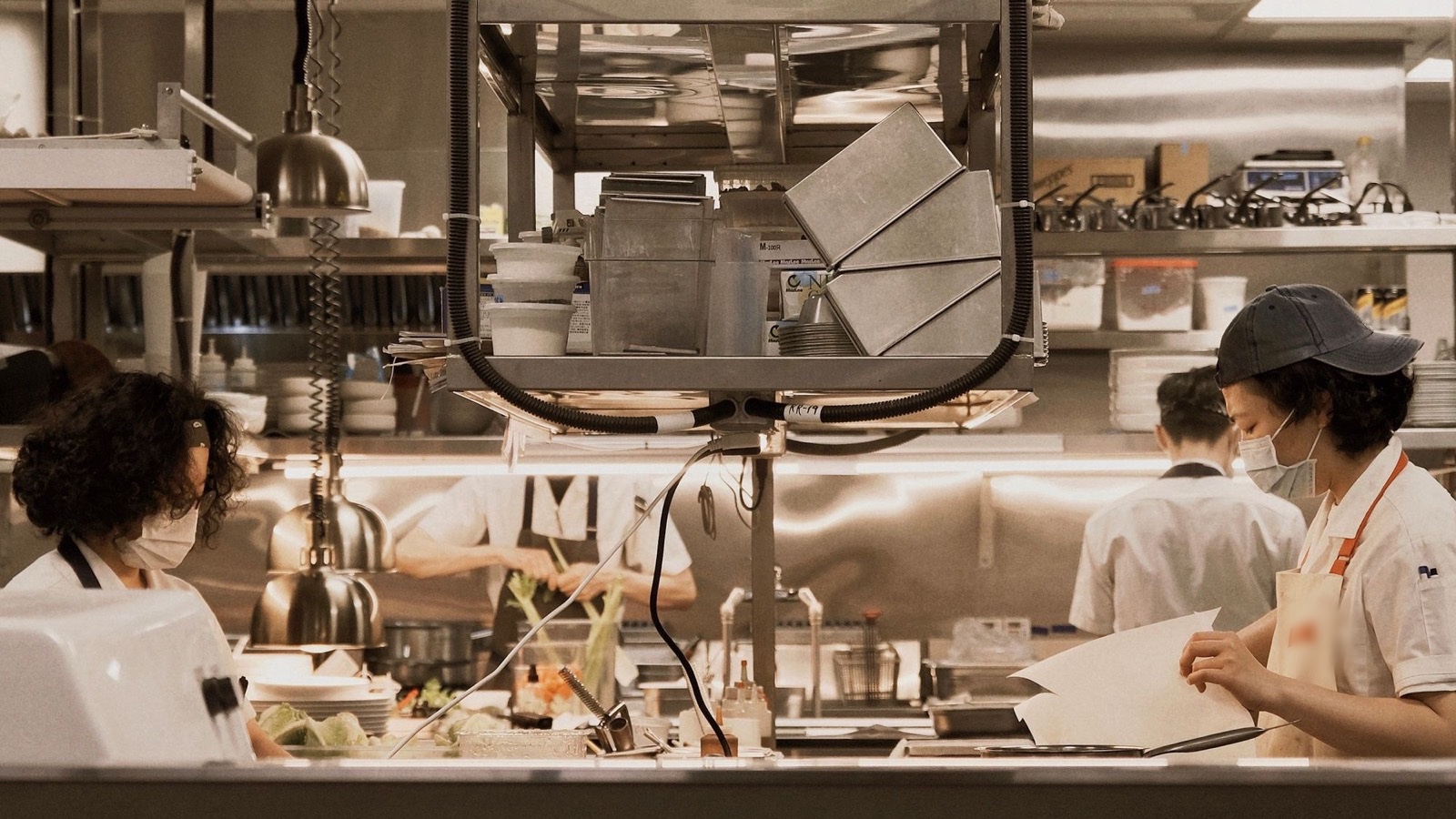
Photo by Teresa Jang on Pexels
"Fast casual" gets used for everything from a burrito counter to a ramen shop with a kiosk. Guests use it to mean "better than fast food, faster than a sit-down." Operators should mean something more specific, because the label describes a whole way of running a restaurant: how people order, how the kitchen is built, how the menu is written and how the crew is staffed.
A fast casual restaurant sits between quick service and full service. Guests order at a counter, kiosk or app, the food is made to order quickly from fresher ingredients, and there is no table service. Behind that simple description is a model that lives or dies on one thing: moving a lunch rush through a make line without the food or the experience slipping.
This guide covers what fast casual actually means, how it compares with quick service and full service, and how the model runs day to day, from the make line to prep, labor, digital orders and keeping every crew consistent. There is a printable line check at the end.
What Is a Fast Casual Restaurant?
A fast casual restaurant is a counter-service restaurant that serves made-to-order food with a higher focus on ingredients and atmosphere than traditional fast food. Most share a few traits:
- Order at the counter, kiosk or app. No server takes the order and no one waits on the table.
- Made to order, quickly. Food is built or finished after the guest orders, often right in front of them.
- Fresher ingredients and more customization. Guests pick a base, a protein and toppings, or adjust a set menu item.
- A nicer room than fast food. Real seating, better lighting and design, and a place people are happy to eat in.
- A price point in the middle. Typically above quick service and below a sit-down restaurant with servers.
Big chains like Chipotle and Panera Bread are often given as examples of the category, but plenty of fast casual restaurants are independents: a neighborhood poke shop, a salad counter, a taco spot with a short menu and a line out the door at noon.
Fast Casual vs Quick Service vs Full Service
The easiest way to understand fast casual is to put it next to the two models on either side of it. The differences show up in every part of the operation.
| Quick service | Fast casual | Full service | |
|---|---|---|---|
| Ordering | Counter, drive-thru, app | Counter, kiosk, app | Server at the table |
| Service | Food handed over or called out | Food handed over, sometimes run to the table | Full table service from start to finish |
| Price point | Lowest of the three | In between | Highest of the three |
| Menu | Highly standardized, cooked ahead or in batches | Short list of components, built to order | Broader menu, cooked to order by station |
| Kitchen setup | Production line built for speed and volume | Make line in view of the guest, with heavy prep behind it | Hot line with stations, expo and a pass |
| Labor focus | Speed and repetition | Throughput at peaks, cross-trained crew | Front-of-house service plus a skilled line |
Fast casual borrows the ordering model from quick service and the food expectations from full service. That combination is exactly what makes it demanding to run. Guests expect fast-food speed and sit-down quality at the same time, from a crew that is usually small and often new.
The Make Line: How Orders Actually Move
The make line is the heart of a fast casual restaurant. It is an assembly line, usually in full view of the guest, where each station adds one part of the order before it moves down the counter. How it is laid out decides how fast the line moves at noon.
| Station | What happens there |
|---|---|
| Order point | The guest orders at the counter or kiosk. On a guest-facing line, this is often the first station itself. |
| Base | Rice, greens, grains, bread or tortilla. The first build step, portioned with a set tool. |
| Protein | The highest-cost item on the plate, so portioning here matters most. Often backed by a grill or oven behind the line. |
| Toppings and sauces | The widest set of choices. Where lines slow down if containers aren't full and in a set order. |
| Finish and pack | Garnish, lid, bag or tray, utensils and sides. Checks the order against the ticket. |
| Handoff | Order called or placed on the pickup shelf for dine-in, takeout or delivery drivers. |
A few things make the difference between a line that flows and one that backs up. Every container is in the same spot every day. Every station has the right portion tool. The busiest choices sit closest to the crew member who scoops them. And nobody walks away from the line mid-rush to refill a pan, because the backups are already staged. That is mise en place applied to a whole counter, and the physical layout behind it is covered in our guide to restaurant kitchen layout.
Your best shift, every shift.
- Protect your revenue
- Give your managers their time back
- Lower your risk with clear standards
- Hold everyone accountable
A Menu Built for Throughput
A fast casual menu looks simple on the board, but it is engineered for the line. The best ones are built from a short list of components that combine into many different orders. A dozen ingredients can make dozens of bowls, and every one of them comes off the same stations.
- Few components, many combinations. Every new ingredient is another pan on the line, another par level and another thing to run out of.
- Every item uses the same stations. A menu item that needs its own station or a long cook time slows the whole line.
- Customization with limits. Guests can build their own, but within a set of choices the line can actually handle at speed.
- Limited-time items that reuse what's there. A seasonal special built from existing components keeps things fresh without adding a station.
Every component should also be costed. Because guests build their own orders, portioning at the protein and topping stations is where food cost is won or lost. Our guide to food cost covers how to run those numbers, and our guide to restaurant menu design covers how to lay out the board so the right items get picked.
Prep Is the Real Kitchen
In a fast casual restaurant, most of the cooking happens before the doors open. Proteins are marinated and cooked, sauces are made, vegetables are cut, grains are cooked in batches. The make line during service is mostly assembly. If prep is short, the line is short, and there is no time to catch up at noon.
That makes the prep list the most important document in the building. It should be built from par levels for each daypart, adjusted for the day of the week, and checked off with a name next to each item. Batch cooking during service, when the line runs low, needs its own plan: who cooks the next batch, when, and how much.
How long prepped food can be held, and at what temperature, is something to set in your own written procedure and confirm with your local health department. Then make that procedure part of training and the opening check, not something each crew figures out on its own.
The Labor Model
Fast casual labor is built around peaks. A typical day has a heavy lunch, a slower afternoon and a dinner that may be busy or light depending on the neighborhood. The crew has to flex with that, which means a few things:
- Cross-training is essential. The same person may run the register at 11am, the protein station at noon and prep at 3pm.
- Staff to the peak, not the average. Add people for the lunch rush and step down after, instead of carrying a full crew all day.
- Prep shifts are their own role. Separating morning prep from service shifts keeps the line fully stocked without pulling people off it.
- Turnover is a constant. Crews in counter-service restaurants change often, so training has to be fast and repeatable.
The math behind staffing to peaks is covered in our guide to restaurant labor cost.
Digital Orders Change the Line
Online and app orders are a big part of the fast casual model, and they change how the line works. A guest standing at the counter can see the line. A digital order shows up with a pickup time and no patience for a delay.
Many operators handle this with a separate make line or a dedicated station for digital orders, so a big online order doesn't stop the walk-in line cold. The rest comes down to basics: a clear pickup shelf, orders labeled and sealed, pickup times the kitchen can actually hit, and someone owning the handoff to delivery drivers. Our guide to restaurant online ordering systems covers the tools side.
Keeping Every Crew Consistent
The hardest part of fast casual isn't speed. It's sameness. A guest who orders the same bowl on Monday and Friday expects the same portions, the same sauce and the same look, whether the line is run by a veteran or someone on their third shift. With a cross-trained crew and steady turnover, that only happens if the standard lives somewhere other than people's heads.
Do this
- Build cards with portion sizes and photos at every station
- A fixed container order on the line, every day
- An opening line check with a name on it
- A prep list built from par levels by daypart
- Short, repeatable training for each station
Not that
- "Watch how Sam scoops it"
- Each opener setting up the line their own way
- Finding the empty pan at 12:15
- Prepping "about the same as yesterday"
- New hires learning every station during a rush
This is what standard operating procedures are for. In fast casual, the SOPs are short and practical: how to set each station, how much goes in each scoop, how the pickup shelf is organized. For the bigger picture of how these systems fit together, see our restaurant operations guide. And if you are planning the room itself, our guide to restaurant floor plans covers how the queue, seating and pickup area fit together.
The Free Fast Casual Line Check
Run this before every service. Tape it at the end of the line, or save it as a PDF for your opening binder.
Fast casual line check
Tick items off on screen, or save it as a PDF and print it. No email required.
Before doors open
Front and digital
A fast casual restaurant runs on repetition: the same line setup, the same portions and the same prep, every day, with whatever crew is on. If keeping that consistent across shifts and locations is the hard part, that is what Crewli is built for. We build a custom app around how your restaurant already runs, with prep checklists, station checks, build guides and training in one place, so every crew works from the same standard. Let's talk.
Frequently Asked Questions
What is a fast casual restaurant?
A fast casual restaurant is a counter-service restaurant that serves made-to-order food with more focus on ingredients and atmosphere than traditional fast food. Guests order at a counter, kiosk or app, the food is built or finished quickly after they order, and there is no table service. Prices typically sit between quick service and full-service restaurants, and the menu usually lets guests customize their order.
What is the difference between fast casual and quick service?
Both use counter or app ordering with no table service. Quick service is built for maximum speed and low prices, with a highly standardized menu often cooked ahead or in batches. Fast casual puts more weight on fresher ingredients, made-to-order food, customization and a nicer dining room, and typically charges more. Operationally, fast casual usually runs a guest-facing make line backed by heavy prep, rather than a production line built purely for speed.
What is the difference between fast casual and casual dining?
The main difference is service. Casual dining restaurants have servers who take orders at the table and bring the food, and guests usually pay at the end of the meal. Fast casual restaurants have guests order and pay at a counter, kiosk or app, with no table service. Casual dining usually has a broader menu and higher prices, while fast casual is built around a shorter menu and faster turnaround.
What are examples of fast casual restaurants?
National chains like Chipotle and Panera Bread are often cited as examples of the category, but plenty of fast casual restaurants are independents: salad and grain bowl counters, poke shops, taco and burrito spots, sandwich shops, noodle bars and build-your-own pizza places. What they share is counter ordering, made-to-order food, customization and a price point between fast food and sit-down dining.
How does a fast casual make line work?
A fast casual make line is an assembly line, usually in view of the guest, where each station adds one part of the order: a base like rice or greens, then the protein, then toppings and sauces, then finishing, packing and handoff. Speed depends on setup: every container in the same spot every day, the right portion tool at each station, the most popular choices closest to hand, and backup pans staged so nobody leaves the line mid-rush.
How many employees does a fast casual restaurant need?
It depends on your volume, hours, menu and how much prep you do in house. Instead of a fixed number, staff to your peaks: enough crew to run every station on the make line during the lunch rush, plus dedicated prep shifts before service, then step down during slower hours. Cross-training lets a smaller crew cover more positions. Track sales against labor hours by daypart to see where you are over or under.
What makes a fast casual restaurant successful?
Consistency at speed. The best fast casual operations serve the same portions and the same quality on every order, no matter who is on the line, and keep the line moving during the rush. That comes from a menu built from a short list of components, prep driven by par levels, a make line set up the same way every day, clear build cards at each station, and short, repeatable training for a crew that changes often.