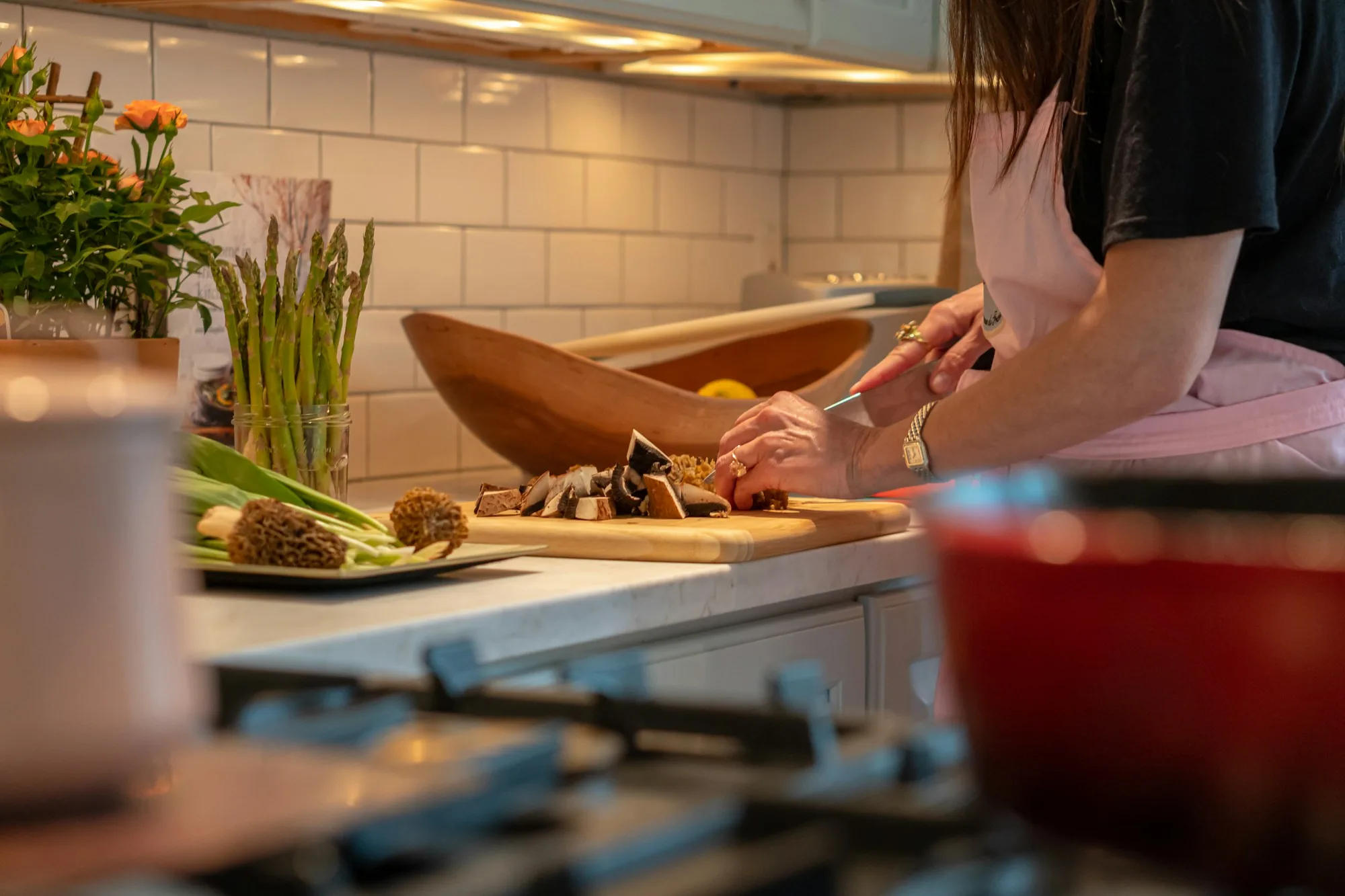
Photo by Douglas Fehr on Unsplash
Watch a Tuesday prep shift at most restaurants and you will see something strange: the same task being done five different ways by five different people. The brunch potatoes are par-cooked at one temperature today, a different temperature tomorrow. The new hire portions the dressing differently than the veteran. The dish that gets a 5-star review on Yelp Friday and a 1-star review on Sunday looks like it came out of two different kitchens — because, in a way, it did.
This is what life without restaurant standard operating procedures looks like. Not chaos — most operations have enough good people to muddle through. Just an expensive, invisible drift away from the standard you actually built. SOPs are how you stop guessing. They are written, step-by-step instructions for how a specific task should be done, and they turn the standard from something in a manager's head into something that lives where the work happens.
Below is what restaurant SOPs actually are, why they matter, the five categories every restaurant needs, how to write them so staff actually use them, and the mistakes that make them useless before anyone reads the second page.
What Are Restaurant Standard Operating Procedures?
Restaurant standard operating procedures (SOPs) are written, step-by-step instructions for how a specific task should be done in your restaurant. Opening the kitchen. Prepping a dish. Greeting a guest. Closing the bar. Each one is its own SOP, and each one assumes a station that's set up to run, which is why a sound restaurant kitchen layout is the foundation every kitchen SOP sits on. Together they make up the operating system of the restaurant.
What separates an SOP from a recipe or a checklist is the level of detail. A recipe says what goes in the dish. An SOP says exactly how the work gets done — who does it, when, in what order, with what tools, to what standard, and what to do when something goes wrong. The point is to remove the variable of who happens to be on shift that day. In practice the SOP defines the standard, and restaurant checklist software makes sure each step actually gets done and logged, shift after shift.
Why SOPs Matter
Operators tend to discover SOPs the hard way — usually after they lose a senior person and watch the operation wobble for three months. Done in advance, SOPs do four things at once:
- Consistency. Five hires trained by five different veterans no longer produce five different versions of the standard. The standard is the document, not the trainer.
- Faster training. A new hire with a written SOP can be productive in a fraction of the time it takes to learn the same task by osmosis. Most early-exit turnover is people leaving because they feel lost, not because the work is hard — see our breakdown of restaurant staff turnover for the cost of getting onboarding wrong.
- Resilience against departures. When a key team member leaves, the knowledge they were carrying alone walks with them — unless it was documented. We covered the dynamic in our piece on what happens when a key employee leaves and takes the knowledge with them. SOPs are the antidote.
- Cleaner labor cost. Veterans spend less of their shift answering "where is the…" questions. Managers stop doing line work to cover gaps. Hours scheduled actually convert to work done — which shows up directly in the labor cost percentage.
Your SOPs hold whether you’re there or not.
The whole operation in one place, built around the way your restaurant already works. Money stops leaking, your time stops disappearing into follow-up, and every shift leaves a record with a name on it.
The Types of SOPs Every Restaurant Needs
Different restaurants need different specifics, but the categories are stable. Most full-service operations need SOPs in five buckets:
- Kitchen and prep SOPs — Recipes (with measurements and method), station setup, mise en place standards, par levels, allergen handling, food safety routines, plating standards. The granular how-to of the back of house — and the foundation for controlling restaurant food waste, because documented yields and portion sizes are the baseline you measure waste against.
- Service and front of house SOPs — Opening procedures, table greeting and presentation, taking orders, handling modifiers, running food, table maintenance during service, handling complaints, closing the floor.
- Bar and beverage SOPs — Cocktail specs and build order, wine service, bar opening, bar prep, par levels, end-of-shift inventory, closing procedures.
- Management SOPs — Cash handling and deposit, scheduling, incident reports, comps and voids, void rate review, shift handover, vendor calls, ordering rhythm.
- Recipe and plating SOPs — One standardized spec per dish covering yield, portion, method, plating, allergens, and plate cost. Our recipe sheet template is a ready-made version, and the bar cleaning checklist covers the bar side of the same discipline.
- Cleaning and sanitation SOPs — Daily cleaning tasks, weekly deep cleans, monthly equipment cleans, walk-in temp logs, dish pit standards, restroom checks. Our restaurant cleaning schedule breaks all of it down by interval and owner.
You do not need to write all of them on Day 1. You need to write the ones where the cost of inconsistency is highest right now — usually recipes, opening, and closing, in that order. The daily operations checklist is where those three SOPs intersect with what your team actually does every shift.
How to Write a Restaurant SOP
Most SOPs fail because they were written by someone who already knew the task, for someone who already knew the task. The trick is to write for the person who has never done it before — the new hire on Day 3, alone for the first time.
The format that works:
- Title — Short, action-oriented. "Open the Kitchen" not "Kitchen Opening Procedure v2.3 Final."
- Owner — Whose role this belongs to. Sous chef. AM line cook. FOH lead.
- When — Time of shift, frequency, trigger.
- Tools or supplies needed — A short bulleted list before the steps.
- Steps — Numbered, in the order they happen, in plain language, each one a single imperative sentence. "Turn on the hood vents." Not "The first thing the line cook should do is begin the process of activating the ventilation system."
- Standard — What "done correctly" looks like at the end.
- Common issues — Three or four things that go wrong, with the fix.
- Updated date — So staff can tell which version is current.
Keep each SOP to one page if at all possible. Two pages absolute max. If it does not fit, the task probably needs to be split into two SOPs.
The shortest test of whether your SOP is any good: hand it to a current team member who has never done the task, watch them follow it, and edit every sentence that confused them. Repeat with the next new hire who joins. By the third edit, the SOP is robust.
What a Good Restaurant SOP Looks Like
For illustration, here is what a one-page kitchen opening SOP looks like in practice:
Open the Kitchen
Owner: AM Sous Chef · When: Daily, 9:00 a.m. · Updated: May 2026Tools: Master key · Walk-in thermometer log · Cleaning caddy · Prep list
Steps:
- Unlock side door at 9:00 a.m. Disarm alarm with code; reset for staff entry.
- Turn on hood vents (switch by the pass). Light the pilot lights. Bring stove and grill to operating temperature.
- Check walk-in temperature. Record on the daily temp log; it must fall inside the safe range posted on the log.
- Walk the prep list. Adjust based on yesterday's leftover par and today's expected covers.
- Pull the day's mise en place from the walk-in. Set up stations per the station map.
- Check the order sheet for the morning delivery. Sign off on the pending items.
- Brief AM cooks at 9:45 a.m. — specials, 86s, expected covers, anything different about today.
Standard: By 10:30 a.m., all stations are stocked, the line is at temperature, and the team has been briefed.
Common issues: Walk-in temp outside the posted safe range → call maintenance immediately, move temperature-sensitive product to backup walk-in. Delivery short on an item → call vendor, then update the menu with the GM. Pilot lights out → re-light per the equipment manual; do not force.
That is one page. A new hire can follow it. A veteran can sanity-check themselves against it. A manager can audit a shift against it. Multiply that by 30–50 SOPs covering the rest of the operation and you have an operating system.
The Mistakes That Make SOPs Useless
Most operators who already have SOPs already know they do not work. Here is why:
- Written in the wrong place. A 60-page SOP binder in the back office is effectively invisible during a shift. SOPs only work if they live where the work happens — usually on staff phones.
- Out of date. A recipe changed two months ago and the SOP still references the old one. Once an SOP drifts from reality, staff stop trusting any of them. The whole library loses credibility from one stale doc.
- Too long. Five-page procedures are read once, then ignored. One-page max.
- Written in management voice. "It is the line cook's responsibility to ensure the proper functioning of…" Nobody reads that. Use imperative sentences in plain language: "Turn on the hood vents."
- No owner. When everyone is responsible, no one is. Each SOP needs a role attached.
- Never reviewed. SOPs that no one revisits drift into uselessness. Quarterly audit + ad-hoc updates whenever procedures change.
The pattern: SOP failures are almost never about the writing. They are about distribution, currency, and trust. Get those three right and the rest takes care of itself. That is exactly the job SOP management software is meant to do, and the reason a shared drive full of documents so rarely sticks. The broader framework for building this kind of operational discipline lives in our guide on how to organize restaurant operations. For the kitchen-specific layer — recipe specs, costing, and the move away from paper binders — see our breakdowns of why recipe costing is the habit profitable kitchens never skip and why every serious kitchen is switching to a digital recipe book.
SOPs vs. Handbook vs. Welcome Packet
Operators routinely confuse the three. They are different documents for different moments:
- The employee handbook is policy. Wage rules, harassment, time off, conduct, discipline. Read once, signed once, and (ideally) referenced when something policy-related comes up.
- The new hire welcome packet is orientation. What happens on Day 1, who is on the team, where the lockers are, what time family meal is.
- SOPs are execution. Every shift, every task. The deep how-to.
You need all three. Trying to put the policy stuff in the SOPs makes them long and unread. Trying to put the execution stuff in the handbook makes it unsearchable. Keep them separate and let each one do its job.
For the broader system view of how SOPs fit alongside everything else — labor cost, food cost, organization, training — see our complete guide to restaurant operations. SOPs are the layer that makes every other pillar enforceable.
If you want a partner who builds the operations layer where your SOPs, recipes, checklists, and standards all live in one place — on every team member's phone, always current, always searchable — let's talk.
Frequently Asked Questions
What are restaurant standard operating procedures?
Restaurant standard operating procedures (SOPs) are written, step-by-step instructions for how a specific task should be done in your restaurant — opening the kitchen, prepping a dish, greeting a guest, closing the bar. They turn the standard from something that lives in a manager's head into something that lives where the work happens. SOPs are what make a restaurant repeatable across shifts, locations, and team members.
Why do restaurants need SOPs?
Without SOPs, every shift becomes a re-creation of the standard, filtered through whoever happens to be on. New hires inherit habits, not standards. Veterans burn out being the human help desk. Service drifts and the operator does not know why. SOPs solve all three at once by separating the standard from the person, so the operation does not collapse when a single team member leaves or has an off night.
What types of SOPs does a restaurant need?
Most restaurants need SOPs in five categories: kitchen and prep (recipes, station setup, food safety), service and front of house (opening, closing, greeting, table maintenance), bar and beverage (drink specs, opening and closing), management (cash handling, scheduling, incident reports), and cleaning and sanitation (daily, weekly, deep cleans). The exact list depends on the concept, but those five categories cover what every full-service restaurant has to document.
How do you write a restaurant SOP?
Pick one task. Write the steps in the order someone would actually do them, using plain language and short imperative sentences. Include the start state, the steps, the end state, and what to do when something goes wrong. Keep each SOP to one page if possible. Have a current staff member follow it and edit anything that is unclear. The shortest test of a good SOP: a new hire can execute the task correctly from the document alone.
What is the difference between an SOP and a checklist?
A checklist is a list of items to confirm or complete — quick, repeated, often during a shift. An SOP is the deeper instruction behind each checklist item, used when someone needs to know how to do the task, not just whether it has been done. A daily operations checklist tells you to do the opening procedure; the opening SOP tells you exactly how. You need both.
What is the difference between an SOP, a handbook, and a welcome packet?
The handbook is policy — wage rules, conduct, time off, harassment. The welcome packet is orientation — what happens on Day 1, the team, the schedule, the paperwork. SOPs are execution — exactly how the work gets done, every shift. Three different documents for three different moments. Most restaurants confuse them, write one and call it all three, and end up with none of them working.
How often should restaurant SOPs be updated?
Whenever the procedure they describe changes. Recipes get tweaked, vendors get swapped, opening routines get rearranged — the SOP has to reflect the current version, not last year's. Once an SOP drifts from reality, staff stop trusting any of them. A quarterly review of all SOPs catches drift; ad-hoc updates when something changes prevent it.