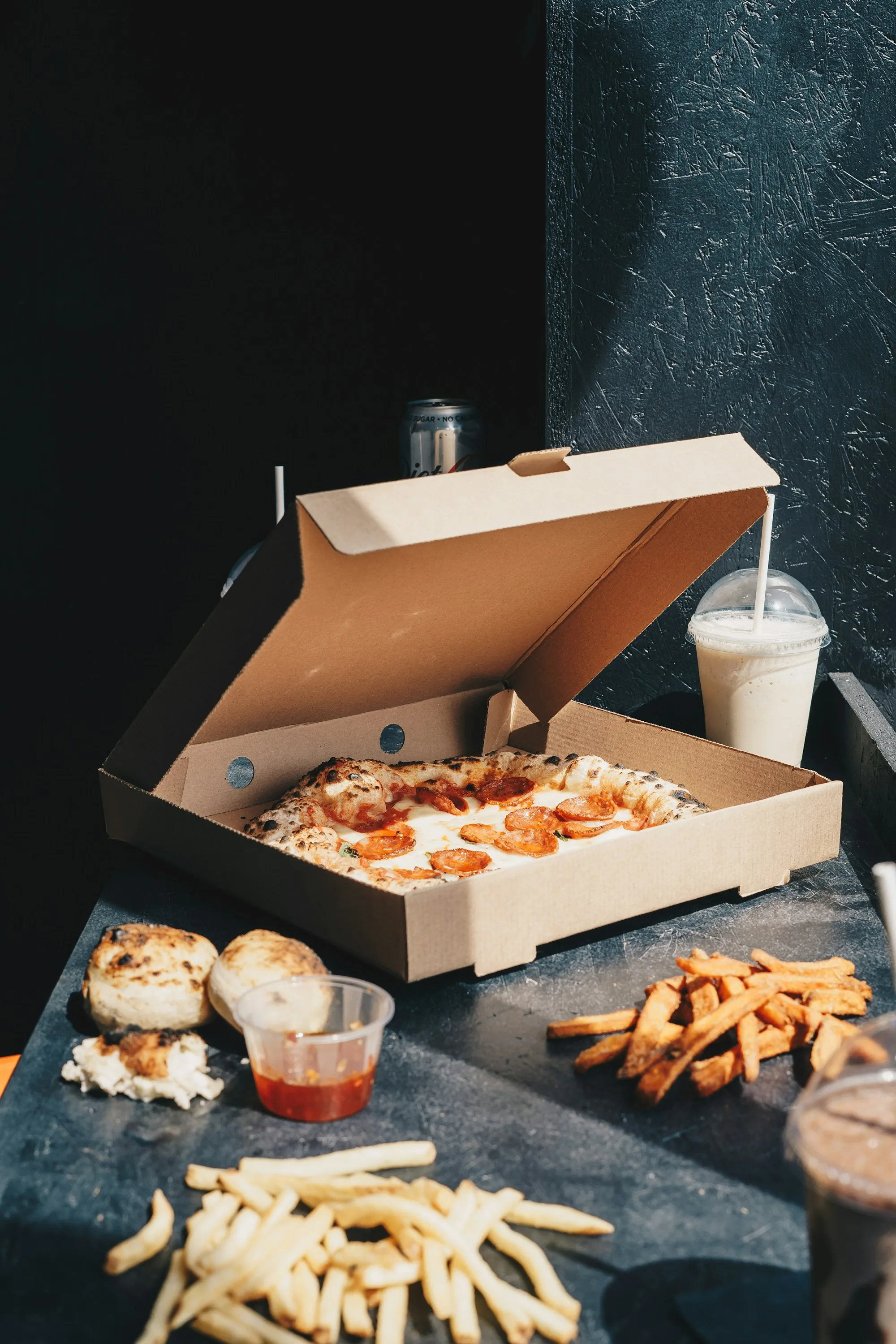
Photo by Ambitious Studio* | Rick Barrett on Unsplash
Walk into any restaurant kitchen at 7:30 p.m. and look at the ticket rail. Half of it is dine-in tickets — guests sitting in the dining room. The other half is online orders coming in from a stack of tablets, each pinging a different alert sound, each routing to a different driver fleet, each taking a different cut of the ticket on the way out the door. Online ordering has changed the economics of running a restaurant. It has also created one of the most consequential — and least understood — technology decisions an operator makes.
Choosing a restaurant online ordering system is not a single decision. It is a series of decisions about which channels to be on, which platforms to use, how to balance discovery (volume from third parties) against margin (revenue from direct), and how to architect the back-end so your kitchen does not get crushed by orders pinging in from five different screens. The operators who treat this thoughtfully run profitable off-premises programs. The ones who treat it as "list us on the apps and see what happens" usually lose money on takeout without realizing it for months.
This guide is written for the operator who has to decide. We cover what online ordering systems actually do, the three fundamental models you can choose from, the features that matter (and the ones that don't), the real cost beyond the monthly subscription, the economics of direct vs. third-party, how to evaluate vendors, and the mistakes that quietly sink online ordering decisions.
What Is a Restaurant Online Ordering System?
A restaurant online ordering system is the technology that lets guests order food from your restaurant through a website, app, or third-party marketplace — for pickup, delivery, or both. It covers four layers: the customer-facing storefront (the screen the guest orders from), order routing (how the ticket gets to your kitchen), payment processing (how the guest pays), and order management (the interface your team uses to confirm, fulfill, and track orders).
Operators tend to think of "online ordering" as a single decision. It is actually three intertwined decisions:
- What channels do we want to be on? Our own website, third-party marketplaces, both?
- How do we want orders to reach the kitchen? One unified inbox, or separate screens per platform?
- How do we want to balance volume vs. margin? Third-party brings traffic but takes commission. Direct keeps the margin but requires marketing effort to drive traffic.
Get those three questions right and your online ordering program becomes a real revenue channel. Get them wrong and you have a stack of tablets making noise on the line while your team scrambles to keep up — and your margin gets quietly siphoned away by commissions you never modeled.
The Three Models of Online Ordering
Every restaurant online ordering system falls into one of three categories. Understanding the difference is the foundation of every other decision in this space.
1. Third-Party Marketplaces (Aggregators)
The platforms that aggregate restaurants into a consumer marketplace and bring you orders from their audience. The model is simple: they handle discovery, payment, and (in most cases) delivery via their driver fleet. You handle the food. In exchange, they take a commission per order — typically a meaningful percentage of every ticket.
The case for: volume. Their consumer audience is enormous, the marketing is already done, and listing is relatively painless. Operators who go from zero to "available everywhere" overnight do so through marketplaces.
The case against: commission economics. Every order you fulfill through a marketplace loses a chunk of margin to commission. At scale, that line item adds up. There's also customer data lock-in — the guest is technically their customer, not yours. You cannot easily market to them again outside the platform.
2. Direct Online Ordering
An ordering system that lives on your own website. The guest orders directly from you. You handle (or contract for) delivery. The platform charges a subscription fee instead of per-order commission.
The case for: margin. A direct order keeps far more revenue than the same order coming through a marketplace. You also own the customer data — name, email, order history — for marketing and retention. Loyalty programs work meaningfully better when they live in your direct channel.
The case against: traffic. The platform handles ordering well, but you have to drive traffic to your own ordering page through your marketing, your existing customer base, and your in-store touchpoints. For new concepts without an audience, direct alone usually does not produce enough volume to matter.
3. The Hybrid (Most Common)
Most full-service and fast-casual operations run both. Third-party marketplaces for discovery and incremental volume. Direct ordering for the repeat customer base they convert from marketplace orders, walk-ins, and existing guests. The strategy is to use third-party to fill the top of the funnel and direct to capture margin on repeat orders.
The hybrid is more complex to manage — you have multiple platforms, multiple commission structures, multiple sets of tablets pinging in the kitchen — but it is the model that produces the best margin economics for most concepts at scale.
The off-premise order goes out right whether you’re there or not.
The whole operation in one place, built around the way your restaurant already works. Money stops leaking, your time stops disappearing into follow-up, and every shift leaves a record with a name on it.
Features That Actually Matter
Vendor feature lists for online ordering platforms are long. Most operators only use a fraction of what they pay for. The features that actually drive day-to-day operations:
- Mobile-friendly customer storefront. The majority of online orders are placed on phones. If the menu does not render well on mobile, you lose orders at the cart. This is not negotiable.
- Real-time menu management. The ability to 86 an item across all channels instantly. Without this, you sell what you do not have, refund frustrated customers, and damage your reputation on the platforms.
- Order routing with timing logic. Orders should reach the kitchen with a recommended fire time, not all at once. Otherwise the line gets buried in 20 minutes of tickets and the next two hours of dine-in service suffers.
- Integrated payment processing. Payments handled end-to-end inside the platform. Manual reconciliation across channels is a tax on your bookkeeper's time you should not pay.
- Customer accounts with order history. Repeat customers see their last order, can reorder in one tap, save preferences. This dramatically increases reorder rate.
- Branded experience. Your name, your logo, your colors — at least for direct ordering. Generic ordering pages train customers to associate the ordering experience with the platform, not with you.
- POS integration. Orders flow into the POS as tickets. Sales data flows into your reporting. Without integration, the team double-enters everything and your numbers never quite reconcile.
- Reporting on what matters. Average ticket size by channel, reorder rate by customer, peak hour analysis, top items by channel. Not vanity metrics — operational data that drives decisions.
- Catering and scheduled orders. For concepts with catering potential, scheduled ordering (orders placed today for a future time) is its own revenue stream worth enabling.
What you do not need: an in-app loyalty program that conflicts with your existing CRM, "AI-powered" upsell features whose actual lift is unclear, marketing automation tools you will never set up, or any feature whose primary purpose is to push you onto a higher pricing tier.
The Real Cost (Beyond the Subscription)
The visible cost is the monthly subscription line. It is usually the smallest cost. The fully-loaded cost of running an online ordering program includes several layers operators routinely underestimate:
- Subscription / licensing fees. Direct ordering systems. Usually low to mid hundreds per month depending on tier.
- Per-order commissions. The biggest line item for restaurants leaning on third-party. Across a year of volume, the commission line frequently exceeds every other tech-related expense combined.
- Payment processing. Separate fees on every transaction, even direct orders. Small per-order but adds up at volume.
- Packaging. Containers, bags, utensils, condiment cups, labels. A significant per-order cost that does not exist for dine-in. Most operators underprice their online ordering menu because they do not include packaging in the cost calculation.
- Labor for fulfillment. Someone has to package the order, run it to the pickup counter or handoff zone, and confirm pickup. That labor is real even if it does not show up as an invoice. The math behind why this matters lives in our guide on restaurant labor cost.
- Food cost shifts. Some dishes travel well, some do not. Online ordering menu engineering is its own discipline. The basic per-dish math is in our restaurant food cost calculator, but the takeout-specific overlay matters separately.
- Tablet hardware and maintenance. Each platform you list on is another tablet on the kitchen wall. Tablets break, displays fail, chargers wear out.
- Customer service. Refunds, complaints, missed orders. Online ordering generates a higher complaint rate than dine-in because more variables go wrong (driver delays, missing items, wrong substitutions). Someone owns that workload.
The fully-loaded cost picture is what separates a profitable online ordering program from one that quietly loses money for a year before someone notices. Build the math before scaling.
Direct vs. Third-Party: The Economics
This is the central economic decision in online ordering. The simplified math:
- Third-party order: Ticket value minus commission minus payment processing minus packaging minus labor for fulfillment = your remaining margin.
- Direct order: Ticket value minus payment processing minus packaging minus labor for fulfillment minus your share of the direct platform subscription = your remaining margin.
On a per-order basis, direct almost always wins on margin. The harder question is which one wins on volume — and the right answer for most concepts is "use both, but actively work to shift the mix toward direct over time."
The strategy that compounds: use third-party for discovery (introducing new customers to your restaurant), then convert them to direct on their next order through inserts, receipts, loyalty incentives, and email follow-up. Over 12-18 months, the percentage of orders going direct climbs from 20% to 40% to 60% — and the commission line shrinks proportionally.
This is a multi-quarter discipline, not a switch. The operators who run it patiently end up with materially better off-premises economics than the ones who just list on every platform and hope.
How to Evaluate Vendors
The decision frameworks differ slightly between direct platforms and third-party marketplaces. Both deserve scrutiny.
For direct ordering platforms:
- Trial in your actual operation. Insist on at least 30 days with real menu data and real orders. Demos hide friction; trials surface it.
- Test the POS integration end-to-end. Walk an order through the customer experience, the kitchen ticket, the reporting, and the payout. Where it breaks is where it will keep breaking after you sign.
- Confirm customer data ownership. Can you export your customer list when leaving? Do you own the relationship for marketing purposes? This clause determines whether the platform is leveraging your customers or you are.
- Calculate fully-loaded cost. Subscription + processing + setup + tablet hardware + your team's training time. Across 3 years.
- Talk to operators using it. Find restaurants of similar size and concept and ask honestly: would you choose this again? What works? What doesn't?
For third-party marketplaces:
- Read the contract. Specifically the commission structure (tiered? volume-discounted? pickup vs. delivery?), the exclusivity clauses, and the termination notice requirements.
- Model the commission cost on realistic volume. What percentage of your projected off-premises revenue will go to commission? Run the math at 3 months, 6 months, and 12 months of projected volume.
- Understand the visibility model. How does the platform decide which restaurants get promoted? Do you have to pay extra for marketing placement? This affects your real volume materially.
- Confirm your menu control. Can you set different prices for the platform vs. direct (sometimes called "menu uplift")? Many operators raise menu prices on third-party to offset commission, which is legitimate if the platform allows it.
- Plan the conversion path to direct. Before signing, know exactly how you will use third-party customers to grow your direct channel. Without that plan, every marketplace order is a one-off transaction at commission.
The broader principles of evaluating restaurant technology — applicable here and across every other tech category — live in our restaurant technology pillar guide. Online ordering is one of the highest-stakes versions of those principles.
Common Mistakes Operators Make
The mistakes show up consistently across operators of every size:
- Treating "online ordering" as a single decision. It is three decisions — channels, routing, balance — and they need to be made deliberately, not by default.
- Not pricing for packaging. Online ordering menus need to bake in container cost, label cost, and labor for assembly. Pricing the same as dine-in quietly erodes margin on every order.
- Listing on every platform without modeling the commission cost. "More platforms equals more orders" is true. "More platforms equals more profit" is not automatically true. Run the math.
- Skipping the conversion strategy. Operators who list on third-party platforms with no plan to convert those customers to direct stay permanently dependent on commission. The conversion plan is the entire game.
- Bad menu engineering for off-premises. Selling items that do not travel well — fried foods that get soggy, salads that wilt, dishes with delicate plating — produces complaints and lost customers. Build an off-premises menu around items that hold quality during transit.
- No process for handling complaints. Online ordering generates more complaints than dine-in. Without a clear refund and re-cook policy, every complaint becomes a manager interruption.
- Not training the team properly. The line cooks need to know what an online order ticket looks like, where it gets staged, who confirms pickup. Without documented procedures, every channel becomes a source of confusion during a rush. The framework lives in our guide on restaurant staff training.
- Tablet chaos in the kitchen. Five tablets, five alert sounds, five different platforms. The kitchen becomes a beep factory. The operators who handle this best consolidate all incoming orders into a single screen via integration, often using a unified order management layer that sits on top of all the channels.
Online ordering, like every other tech category, rewards operators who think it through deliberately and punishes those who treat it as set-and-forget. The same discipline that goes into the rest of a restaurant manager's responsibilities applies here — maybe more so, because the channel produces real ongoing margin impact every shift.
The companion to this post in the cluster is our guide on restaurant reservation software — the technology that handles your dine-in flow, parallel to the off-premises flow this post covers. Both decisions matter. If you're thinking more broadly about what's worth automating across the operation — not just ordering — our guide on restaurant automation covers what's worth automating, what's not, and how to start. And if your operation has specifics that off-the-shelf ordering platforms keep failing to accommodate, our piece on custom restaurant apps vs. off-the-shelf software covers when going custom is the right call. The National Restaurant Association publishes annual industry data worth referencing for broader context.
If you want a partner who builds the operations layer where online orders, menus, prep lists, recipes, and team workflows all connect in one place — designed around your specific concept rather than a generic off-the-shelf template — let's talk.
Frequently Asked Questions
What is a restaurant online ordering system?
A restaurant online ordering system is the technology that lets guests order food from your restaurant through a website, app, or third-party marketplace — for pickup, delivery, or both. It includes the customer-facing storefront, the order routing to your kitchen, payment processing, and the order management interface your team uses to confirm and fulfill orders. Most operations use a combination of direct ordering on their own website and listings on one or more third-party marketplaces.
What is the difference between direct online ordering and third-party platforms?
Direct ordering happens on your own website or app — the guest places the order with you directly and you keep the full ticket value minus payment processing fees. Third-party platforms (the marketplace aggregators) bring you volume from their consumer audience but take a meaningful commission per order. The economics are radically different. Most restaurants need both: direct for repeat guests and regulars, third-party for discovery and incremental volume.
How much do restaurant online ordering systems cost?
Cost depends entirely on the model. Direct ordering systems typically charge a flat monthly subscription plus payment processing fees, often in the low hundreds of dollars per month. Third-party platforms charge commissions per order — often a significant percentage of every ticket. Across a year, the third-party commission line usually dwarfs any subscription cost. Always calculate fully-loaded cost across a 12-month horizon, not the first month.
What commission do third-party online ordering platforms charge?
Commission rates vary by platform, market, and the tier of service (pickup-only vs. full delivery with their driver network). Pickup-only commissions tend to sit at the lower end; full delivery with a dedicated driver fleet at the higher end. Across an entire year of volume, the commission line can become the second or third largest tech-related expense on the P&L. Read every contract carefully — and renegotiate annually.
Is direct online ordering worth it for a small restaurant?
Yes — even for small restaurants. The math is straightforward: a direct order keeps significantly more margin than the same order coming through a marketplace. The challenge is driving traffic to your own ordering page in the first place. Most small operators use third-party platforms for discovery (finding new customers) and then work hard to convert those customers to direct ordering on their next visit through receipts, loyalty programs, and promotional inserts.
Can an online ordering system integrate with my POS?
Most modern systems integrate with major POS platforms, but the depth varies. Basic integrations sync menu items and push orders into the POS as tickets. Deeper integrations sync inventory, manage 86s automatically across channels, track preferred order patterns by guest, and feed margin data back to your accounting. Confirm exactly what the integration does — not just that one exists — before assuming it solves your problem.
How do you reduce dependence on third-party delivery platforms?
The strategy that works: use third-party for discovery, convert to direct for repeat. Include flyers and receipts in every third-party order pointing to your direct ordering page. Offer a small incentive for first direct order (a free side, a discount, a loyalty point). Build a loyalty program that lives in your direct channel. Over time, the percentage of orders going direct climbs and the commission line shrinks. It is a multi-quarter strategy, not a switch you flip.
What features should I look for in restaurant online ordering software?
The essentials: a mobile-friendly menu, real-time menu management (mark items 86'd instantly), order routing to the kitchen with timing logic, integrated payment processing, customer accounts with order history, and reporting on order patterns and revenue. Stronger systems add catering and group orders, scheduled order capability, loyalty integration, branded customer experience, and deep POS integration. Avoid systems that lock your customer data inside their platform.