
Photo by Sean-Paul McKee on Pexels
Restaurant inventory management is counting what you actually have, comparing it against what your sales say you should have, and using the gap to order better and find where product is leaving without being sold. Three parts: the count, the comparison, the fix.
Most restaurants do the first part. Somebody walks the walk-in on the last Sunday of the month with a clipboard, writes numbers on a sheet, types them into a spreadsheet, and the sheet goes in a drawer. The count happened. Nothing was learned. That is why inventory feels like a chore that produces nothing, and it is why the same restaurants are surprised by their food cost every single month.
The count is raw material. The comparison is where the money is, and it is usually a lot of money.
What Restaurant Inventory Management Actually Is
Three jobs, and they are not equally hard.
- Counting. Knowing what is on the shelves right now, in a unit you can work with. This is the physical, boring part, and it is the only part most restaurants do.
- Comparing. Setting what you counted against what your recipes and sales say you should have. This is where inventory turns into information.
- Acting. Ordering to par, and chasing whatever the comparison exposed. This is the part that changes next month's number.
Worth separating from ordering, because people use the words interchangeably. Ordering is what you do with the count. Inventory management is the whole loop, and a restaurant that counts purely to build an order list is doing perhaps a third of it.
The number it protects is food cost
Food cost cannot be calculated honestly without counts. The real formula runs on opening inventory plus purchases minus closing inventory, which gives you what you actually used. Dividing purchases by sales instead, which plenty of restaurants do, produces a number that lurches around depending on when deliveries happened to land rather than on anything you did.
Food used = Opening inventory + Purchases − Closing inventory
If your food cost percentage swings several points month to month and nobody can explain why, missing or sloppy counts are usually the answer. Our food cost calculator covers the dish-level side of that, and recipe costing is what makes the comparison in this article possible at all.
Why Inventory Is Where Margin Quietly Disappears
You buy product. You sell dishes. The gap between what went out the back door in deliveries and what came in the front door as sales is either your margin or your leak, and inventory is the only instrument that tells you which.
What makes this dangerous is that leakage never announces itself. There is no incident. Nobody drops a case. An extra half ounce of protein on a plate, repeated across eight hundred covers, is invisible on every single plate and significant on the invoice. That is the shape of nearly every real inventory problem: small, constant and undramatic.
The count gets done right whether you’re there or not.
The whole operation in one place, built around the way your restaurant already works. Money stops leaking, your time stops disappearing into follow-up, and every shift leaves a record with a name on it.
How to Count Without Wasting a Morning
Most operators do not resist inventory because it is hard. They resist it because the way they were taught to do it takes four hours and produces a number nobody trusts. Both problems are fixable, and they are the same problem.

- Build the sheet in shelf order, not alphabetical order. You count by walking the room. A sheet that matches the walk removes all the hunting, and hunting is most of the four hours.
- Count in the unit you store it in. If it sits on the shelf as a case, count cases. Converting to pounds in your head at 6am is where errors come from.
- Two people, one counting out loud, one writing. Faster than one person doing both, and it removes most single-person mistakes.
- Same day, same point in the week, restaurant closed. A count taken while the line is pulling product is fiction. Consistency matters more than which day you pick.
- Have a rule for partials and stick to it. Half a case is half a case every time, or you weigh it every time. What kills a count is one person estimating and the next person weighing.
Do this
- Sheet in shelf order
- Same day, same time, closed
- Two people, one writes
- Count in storage units
- File every completed sheet
Not that
- Alphabetical sheet you hunt through
- Counting mid-service because it is quiet
- Whoever is around, doing it alone
- Converting units in your head
- Typing it up and never comparing
The Free Inventory Count Sheet
Here is the sheet we would hand a new kitchen manager. It is set up by storage area, includes par and order columns so the count produces the order automatically, and comes with a worked example you can delete once you have your own items in.
Restaurant inventory count sheet (free CSV)
Grouped by storage area, in shelf order, with par levels, extended value and order quantities built in. Includes 15 example rows and instructions inside the file.
Download the count sheetTwo columns do the work. Extended Value is on-hand multiplied by unit cost, which values the inventory and shows you at a glance where your cash is sitting. Order Qty is par minus on hand, which turns the count into the order without a second pass.
How Often to Count What
Counting everything every week is the most common way restaurants burn out on inventory. It takes hours, the team starts rushing, and a rushed count is worse than no count because it produces a number you will act on and should not trust.
Count by value and speed instead. A 5% variance on your protein is worth several times a 5% variance on your dry goods, so the protein earns the attention.
| What | How often | Why |
|---|---|---|
| Proteins and seafood | Weekly | Highest value per unit and fastest moving, so a small percentage swing is real money. This is where weekly counting pays for itself. |
| Liquor, beer and wine | Weekly | High value, easy to lose track of, and pour variance shows up quickly enough to act on. |
| Fresh produce and dairy | Weekly | Short shelf life means a count doubles as a waste check before things turn. |
| Dry goods and canned | Monthly | Slow moving and stable in value. Weekly counting here is mostly wasted labor. |
| Paper, chemicals, disposables | Monthly | Rarely the source of a margin problem, but running out mid-service is its own kind of expensive. |
| Everything, full count | Monthly, period end | This is the count your food cost calculation depends on, so it has to line up with your accounting period. |
Par Levels: Turning Counts Into Orders
A par level is how much of an item you want on hand at a fixed point in the week. Set it from how much you use between deliveries, plus a buffer for a busier night than you expected.
Order quantity = Par level − On hand
Once pars exist, ordering stops being a judgment call made by whoever is on and becomes arithmetic that anyone can do correctly. That alone is worth the afternoon it takes to set them, because ordering by feel is how a kitchen ends up with eleven cases of something on a slow week.
Both directions of a wrong par cost you. Set too high and you tie up cash in product that sits, take on spoilage risk, and lose walk-in space you needed for something else. Set too low and you 86 items on a Friday, which costs you the sale and some goodwill on top.
Review pars quarterly, and any time the menu changes or the season turns. A par set in January for a patio-free restaurant is wrong by June. This is closely related to reducing food waste, since most spoilage traces back to a par that nobody revisited.
Theoretical vs. Actual: Reading the Gap
This is the section that makes counting worth the labor. Everything above produces the inputs; this produces the answer.
Actual usage is what your counts say you really used: opening inventory, plus purchases, minus closing inventory. Theoretical usage is what your recipes and your sales say you should have used: portion spec multiplied by the number of that dish you sold. The gap between them is variance, and variance is product that left the building without being sold.
One item, one week: chicken thigh
- Opening count
- 120 lb
- Purchased this week
- 280 lb
- Closing count
- 90 lb
- Actual usage (120 + 280 − 90)
- 310 lb
- Portions sold
- 900
- Spec portion
- 5 oz
- Theoretical usage (900 × 5 oz)
- 281 lb
- Variance
- 29 lb over
At $2.80 a pound, that is roughly $81 in one week, on one item. Nobody noticed anything. No plate looked wrong. Run the same arithmetic across your ten highest-value items and the number stops being academic.
On what counts as an acceptable variance: operators generally aim for low single digits as a percentage on controllable items, but the honest answer is that your own trend matters far more than any benchmark. A variance that is stable and small is a cost you have priced in. A variance that grew this month is a question, and it is the question inventory exists to raise.
The Five Places the Money Actually Goes
When variance shows up, these are the suspects, roughly in order of how often they are the answer.
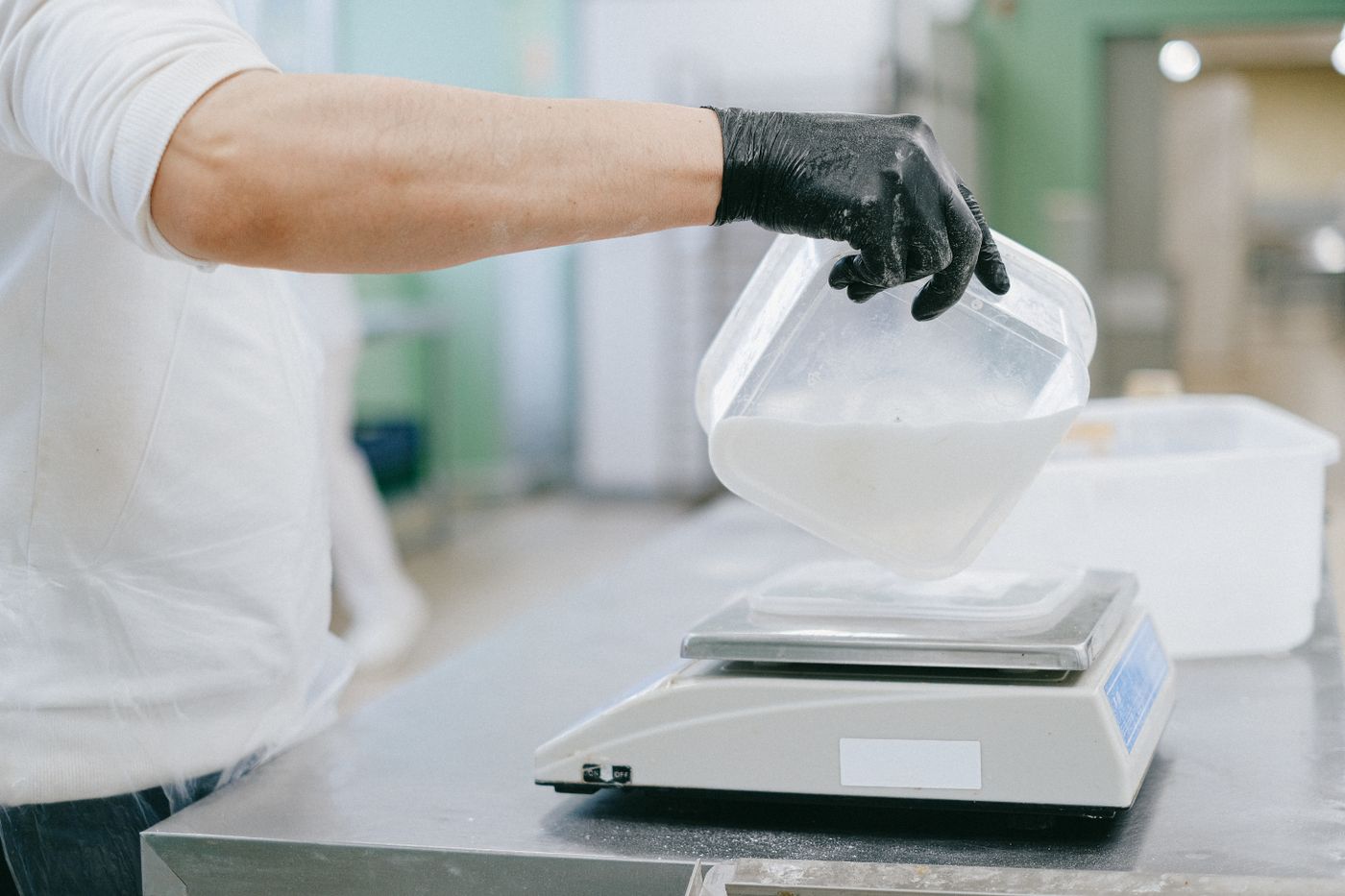
- Over-portioning. Almost always the biggest one. A cook who has never been shown the spec with a scale in hand will drift heavy, because generous feels like good cooking. Fix it with scales and portioning tools at the station, not with a lecture. Costed recipe sheets are the reference the cook needs.
- Waste and spoilage. Product that was bought, stored, and thrown away. A waste log is the only way to see it, because thrown-away product looks identical to sold product in your usage numbers.
- Receiving errors. Short deliveries, wrong items, and invoice prices that do not match what was quoted. Every case you were billed for and never received shows up as variance. Check deliveries against the invoice at the door, while the driver is still there.
- Supplier price creep. Not a usage problem, but it hits the same line. Prices drift up quietly between quotes, and a count sheet with stale unit costs hides it completely. This is why updating unit costs matters, and it feeds directly into how you price the menu.
- Theft. Real, and last on this list for a reason. It is where owners jump first and where the answer usually is not. Rule out the four above before you start suspecting people, because acting on a suspicion that turns out to be a portioning problem costs you a good employee and does not fix the variance.
Do You Need Inventory Software?
Honestly, probably not to start. Most restaurants that struggle with inventory have a routine problem, not a tooling problem, and buying restaurant inventory management software to fix a routine problem gets you a subscription and the same empty spreadsheet.
A spreadsheet handles a single location with a stable menu perfectly well. It is what most independents should use, and there is no shame in it.
Software starts to earn its cost when the manual version genuinely breaks down:
- You are running multiple locations and need counts that roll up.
- Your SKU count is large enough that maintaining unit costs by hand has become its own job.
- Purchase volume is high enough that invoice price changes are impossible to track manually.
- You want theoretical usage calculated automatically from POS sales rather than worked out by hand.
One thing worth knowing before you shop: no restaurant inventory management app counts your shelves for you. Every system on the market still depends on a person walking the walk-in with a sheet. What software changes is the arithmetic afterward, not the count itself, so a restaurant that cannot sustain the count will not be rescued by the tool. Build the habit first; buy the tool when the habit outgrows the spreadsheet. Our guide to a coherent restaurant technology stack covers how to judge that trade-off generally.
Making It Survive a Busy Month
Inventory does not fail on math. It fails in March, when it is busy, the kitchen manager is covering shifts, and the count slips a week, then a month, then stops. Six months later nobody can explain the food cost.
What makes it survive is unglamorous and short:
- A named owner. One person, not "the managers." Usually the kitchen manager or chef.
- A fixed day. Same day every week and every period. On the schedule as a shift, not squeezed in around one.
- A prepped sheet. Printed and in shelf order before the count starts, so the count is walking and writing, nothing else.
- Somewhere the numbers land. The same file every time, so comparison is possible without hunting for last month's version.
- Fifteen minutes on the variance. The count is worthless without this. Put it on the same calendar entry so it cannot be skipped.
That is a standard, so write it down like one. Our guide to standard operating procedures covers turning a routine into something the next person can run, and the daily operations checklist is where the day-to-day habits around it live. If the wider system is what is shaky, start with our complete guide to restaurant operations.
For broader context on cost pressures across the industry, the National Restaurant Association's research library tracks operating trends by service model.
If your counts keep sliding because there is no system holding them, that is the problem we build for. Crewli is a fully custom operations app shaped around how your restaurant actually runs, so counts, pars and the tasks around them have an owner and a date instead of living in somebody's memory. Let's talk.
Frequently Asked Questions
What is restaurant inventory management?
Restaurant inventory management is the practice of counting what you actually have on hand, comparing it against what your sales say you should have, and using the gap to order better and find where product is leaving without being sold. Most restaurants do the counting part and stop there, which is why the counts feel like a chore that produces nothing. The count is only the raw material; the comparison is where the money is.
How do you do inventory in a restaurant?
Build a count sheet in shelf order rather than alphabetical order, count on the same day at the same point in the week with the restaurant closed, and use two people: one counting out loud, one writing. Count in the unit you actually store the item in. Then multiply each count by its current unit cost to value the inventory, and file the sheet, because a single count means little and the comparison between two counts means everything.
How often should a restaurant do inventory?
Do a full count monthly at minimum, tied to your accounting period, and count your high-value fast-moving items weekly. Proteins, seafood and liquor usually justify the weekly count on their own because a small percentage variance on them is worth more than a large one on dry goods. Counting everything weekly is a common mistake: it burns hours, the team starts rushing, and rushed counts are worse than no counts.
What is a par level in a restaurant?
A par level is the amount of an item you want on hand at a set point in the week, calculated from how much you use between deliveries plus a buffer for a busy night. Ordering becomes simple arithmetic once pars exist: order quantity equals par minus what you counted. Pars set too high tie up cash and produce waste; pars set too low produce 86s. Both are worth reviewing quarterly and whenever your menu or your seasonality shifts.
What is inventory variance in a restaurant?
Variance is the gap between theoretical usage, meaning what your recipes and sales say you should have used, and actual usage, meaning what your counts say you really used. Actual usage equals opening inventory plus purchases minus closing inventory. When actual exceeds theoretical, product left the building without being sold. That gap is the single most useful number inventory produces, and it is invisible to a restaurant that only counts to place orders.
Do I need restaurant inventory management software?
Not to start. A spreadsheet handles a single location with a stable menu perfectly well, and most restaurants that struggle with inventory have a routine problem rather than a tooling problem. Software earns its cost when you are running multiple locations, a large SKU count, or high-volume purchasing where invoice price changes are hard to track by hand. It is worth knowing that no restaurant inventory management app counts the shelves for you: the manual count stays the foundation either way.
Where does most restaurant inventory loss actually come from?
Over-portioning, almost always. It is the least dramatic explanation and the most common one, because a consistently heavy hand costs more over a month than a single incident ever does. After that come waste and spoilage, receiving errors like short deliveries and invoice prices that do not match the quote, and supplier price creep. Theft is real but it is usually last on the list, and it is worth checking the process before suspecting a person.
How does inventory affect food cost?
Food cost cannot be calculated accurately without inventory counts. The real formula uses opening inventory plus purchases minus closing inventory to get what you actually used, and dividing purchases by sales instead is a shortcut that produces a number that swings wildly depending on when deliveries landed. If your food cost percentage moves several points month to month with no operational explanation, missing or sloppy counts are usually the reason.