
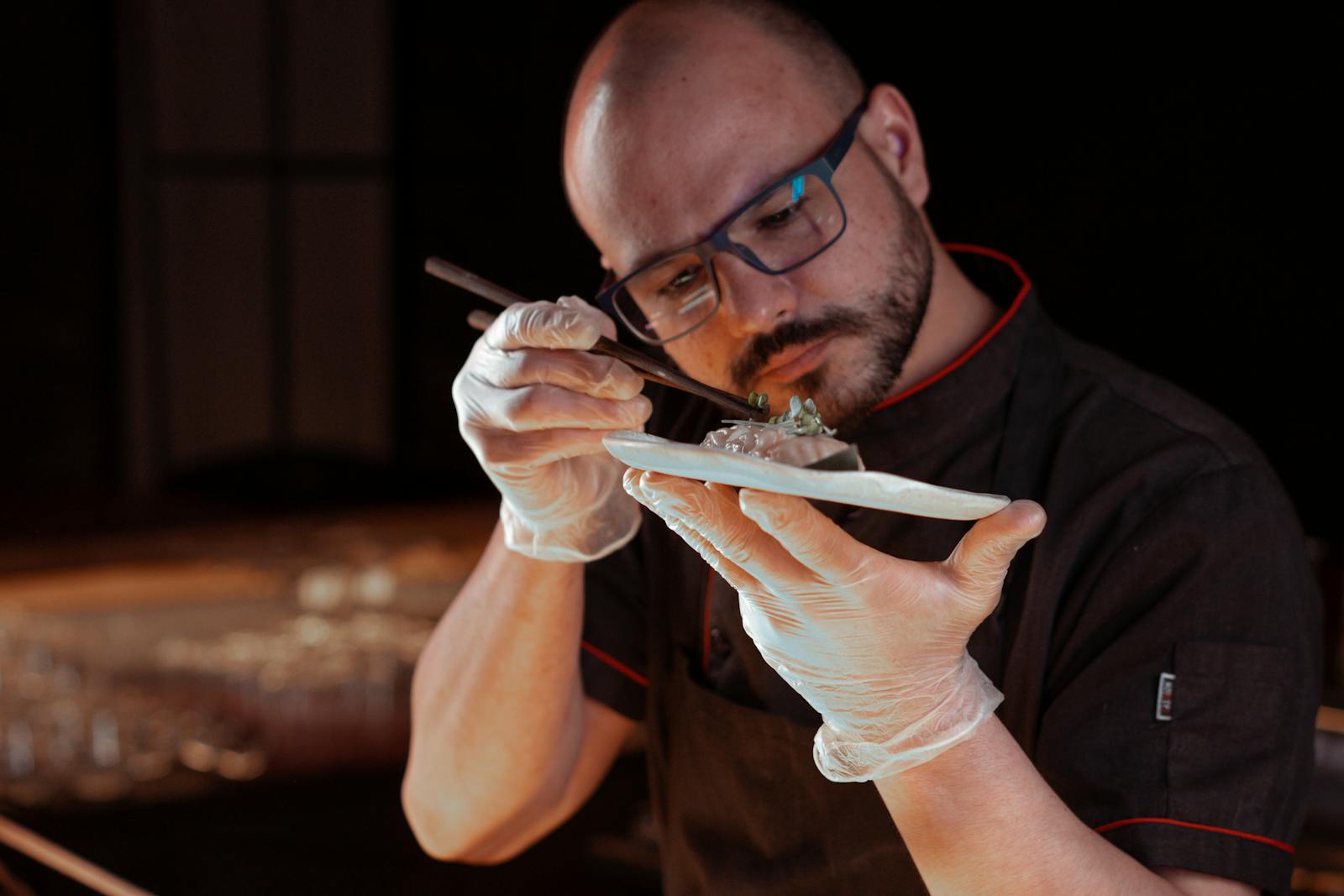
A menu looks like a list of dishes with prices next to them. That's what the guest sees. What the guest doesn't see is the months of work behind every line — the concept arguments, the costing spreadsheets, the supplier negotiations, the test cooks done five times in a row to figure out why dish four was inconsistent, the staff training rolls, the menu psychology debates, and the final pricing decisions that determine whether the restaurant makes money.
Restaurant menu development is the whole of that process. It's half kitchen craft and half operational math, and the restaurants that take it seriously launch dishes that work — both on the plate and on the P&L. The ones that don't end up with beautiful menus that the team can't execute, food costs that wreck the margin, or dishes that nobody orders.
This is what restaurant menu development actually looks like inside a serious operation — start to finish.
What Restaurant Menu Development Actually Is
Restaurant menu development is the structured process of building a menu that's executable, profitable, and aligned with the concept. It pulls from culinary creativity, operational realism, supplier capacity, financial modeling, and staff capability — and the menu only works if all five line up.
Done seriously, it has five distinct phases: concept, recipe build and testing, costing and pricing, execution and training, then launch and iteration. Each phase has a deliverable that the next phase depends on. Skipping a phase — or doing it half-heartedly — is what causes 90% of the problems that show up in the first month after launch.
It's also not a one-time event. Real restaurant menu development is continuous. The big build happens at concept launch or major menu refresh, but the discipline keeps running quietly in the background — new specials, seasonal swaps, removing weak performers, recosting drifted recipes. The menu is never truly finished, which is exactly why every dish needs a written spec you can revise rather than a version living in a cook's memory. Our recipe sheet template is the format we use for that.
Phase 1: Concept and Culinary Direction
Everything starts here. Before a single recipe is written, the chef and ownership have to answer the questions that constrain everything else:
- What kind of restaurant is this? Casual, upscale casual, chef-driven, fast casual, ethnic specialty? The category determines the menu's center of gravity.
- Who is the guest? Neighborhood regulars, destination diners, lunch crowd, late-night, families? Each guest type has different expectations on price, portion, and pace.
- What's the average check target? A $35 average ticket and a $90 average ticket are different menus.
- What's the kitchen capable of? The equipment, the line layout, the cook count, the prep space. Don't design a menu the kitchen physically can't execute during a 200-cover Saturday.
- What ingredients are easy to source consistently? Building a menu around hard-to-source items creates supply problems forever. Build around what you can reliably get.
Concept also defines the menu's structure — how many sections, how many items per section, what categories are required (entrées, starters, snacks, large format, dessert), and what role each section plays. A menu without a structural plan ends up bloated and unfocused.
The new dish goes out right from night one.
The whole operation in one place, built around the way your restaurant already works. Money stops leaking, your time stops disappearing into follow-up, and every shift leaves a record with a name on it.
Phase 2: Recipe Build and Testing
Once concept is set, the chef builds out the recipes. Every dish goes through the same loop:
- Initial recipe draft. Written specification with ingredients, quantities, technique, plating, and a target portion size.
- First cook. The chef makes the dish themselves to verify the recipe works. Adjustments are documented in the spec.
- Cross-test by a different cook. Someone other than the chef cooks the dish using only the written recipe. If they can't execute it consistently, the recipe isn't written clearly enough. Fix the recipe, not the cook.
- Volume test. Cook the dish in batches as it would be prepared during service — full mise en place, full prep volume. Recipes that work for two portions often break when you scale them up.
- Service-speed test. Time the cook-to-plate window. If it doesn't hit the speed the line needs during peak service, simplify the technique or change the prep.
Most chefs underestimate how many test cycles a single dish needs before it's actually ready for the menu. Five to ten passes per signature item isn't unusual. Anything that ships before being properly tested becomes a service problem on opening night — and once a dish is on the menu, fixing it is much harder than getting it right before launch.
Phase 3: Costing and Pricing
This is where most restaurant menu development falls apart. The chef has a beautiful dish, the kitchen can execute it, and then nobody runs the cost properly until the first month's P&L comes back showing a 42% food cost on a dish that was supposed to be 30%.
Every dish that survives the testing phase gets fully costed before it gets a price. The costing process — including every ingredient, every garnish, every drop of oil, every gram of salt, and the yield loss on every protein — is the discipline behind reliable food cost. Our full breakdown of how to do it properly is in our guide on why recipe costing is the habit profitable kitchens never skip.
Once each dish is costed, pricing happens through the framework — cost floor, labor weight, market position, menu psychology — covered in our breakdown of the menu pricing formula most restaurants get wrong. The menu price isn't set when a dish is created; it's set after the cost and the market have been thoroughly checked.
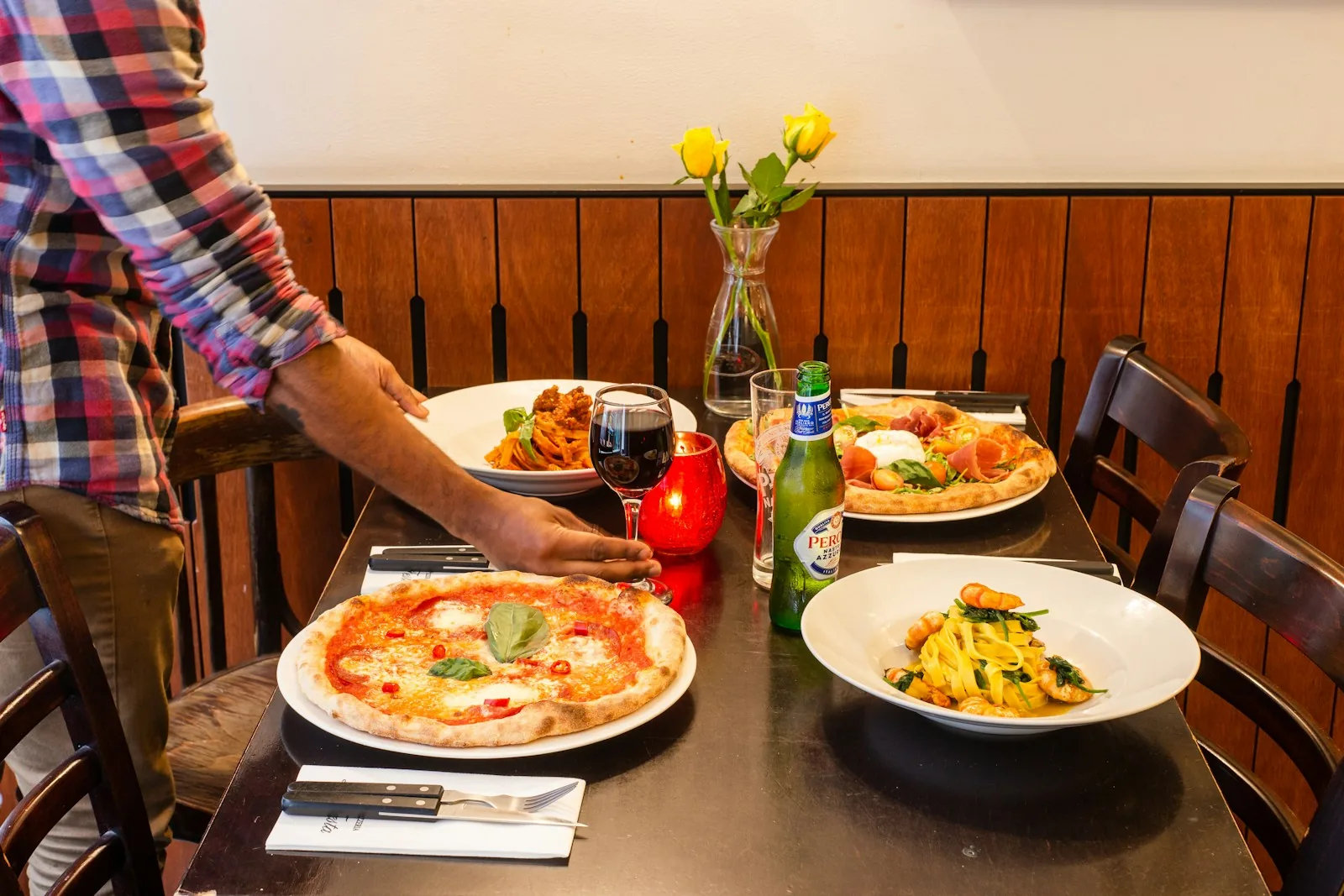
Pricing also has to happen at the menu level, not just per-dish. Once every item has a candidate price, lay the menu out and look at how the prices read together. Is there a clear range? Does the priciest item anchor higher-priced sales? Do the price tiers cluster awkwardly? This is where menu engineering principles start to live — and where you decide which dishes to feature visually to push the right items.
Phase 4: Execution and Training
The best menu in the world fails if the team can't execute it consistently. Menu development includes training as a phase, not as an afterthought.
- Recipe documentation finalized. Every dish has a written spec with ingredients, quantities, technique, plating photo, and portion weight. This is the source of truth — what's on this document is what gets cooked.
- Prep procedures documented. What gets prepped daily, what gets batched, what's mise en place by section. The full discipline behind this is in our guide on restaurant standard operating procedures.
- Line training sessions. Every line cook trains on every dish in their section, multiple times, until the chef signs off that they can execute it to spec under service pressure.
- FOH training. Service staff get walked through every dish — ingredients, allergens, technique, story, recommended pairings. A server who can't describe a dish reduces sell-through on that item. For the broader system, see our breakdown of restaurant staff training.
- Tasting and Q&A. Whole team tastes every menu item before launch. They have to know what the dish actually tastes like to sell it properly.
This phase is where the menu transitions from a creative document into an operational one. Once execution training is complete, the menu belongs to the team — not just to the chef who created it.
Phase 5: Launch and Iteration
Launch isn't the finish line — it's the start of the data collection phase. The first 30 days after a new menu launches are the most important diagnostic window the operator has all year.
Track everything: which dishes are selling, which aren't, which are coming back to the kitchen, which are getting compliments, which servers are pushing what, what the food cost percentage is running by dish and overall, where prep waste is showing up, and where the line is bottlenecking during service. By week 4, the data should be telling you which dishes earned their spot and which ones need to come off.
Iteration is normal and expected. Almost every menu launch results in 1-3 dishes getting modified, repriced, or removed within the first 90 days. That's not a failure of menu development — it's the system working. The failure mode is launching a menu and leaving it untouched for 12 months while problems compound.
The Mistakes That Sink Menu Development
The patterns we see most often:
- Designing the menu in isolation from the kitchen. The chef writes a beautiful menu the line cooks can't execute at volume. The menu needs to be built by people who understand the operational reality, not just the culinary vision.
- Skipping the volume test. Recipes that work for two portions break when you scale to fifty. Always volume-test before launch.
- Costing dishes after pricing them. Pricing comes from costing, not the other way around. Setting prices first and hoping the cost works out is how you end up with 42% food cost.
- Too many items. A bloated menu is operationally expensive — more prep, more waste, more SKUs in inventory, more training, more inconsistency. If you can't justify each item, cut it.
- No iteration plan. Treating the menu as fixed after launch wastes the most valuable data the operation will see all year. Build menu review into the operating rhythm.
- Letting recipe specs decay after launch. The dish that launches isn't the same dish six months later if nobody enforces the spec. The chef's vision drifts into whatever the line cooks happen to be doing.
Restaurant menu development sits inside a broader operational discipline. The systems that make menus executable — recipes, prep procedures, training, food cost tracking — are the same systems that make daily service run smoothly. For the larger picture of how those pieces fit together, see our complete guide to restaurant operations. And if you want recipe specs, prep notes, and training materials to actually live somewhere your team can access them — instead of in a binder nobody opens — our breakdown of why every serious kitchen is switching to a digital recipe book covers the tool side.
If you want your menu development work to stay alive after launch — recipes current, costs accurate, training materials accessible, every dish documented in one place — Crewli builds a fully custom operations platform that holds it all together. Let's talk.
Frequently Asked Questions
What is restaurant menu development?
Restaurant menu development is the structured process of designing, costing, testing, and launching the dishes that go on a restaurant menu. It covers concept and culinary vision, recipe creation, ingredient costing, supplier sourcing, kitchen execution, staff training, and visual menu design. Done well, it produces a menu that's profitable, executable, and reflective of the concept's identity.
How long does restaurant menu development take?
A full menu build for a new restaurant typically takes 8-16 weeks from concept to launch, depending on the size of the menu and the depth of testing. A menu refresh for an existing restaurant — swapping out 4-8 dishes — can be done in 2-4 weeks. Rushing menu development is the most common cause of launch-day execution problems and food cost surprises in the first quarter.
Who is involved in restaurant menu development?
At minimum: the executive chef or chef-owner, the operations or general manager, and someone responsible for finance or food cost. Larger operations also include the beverage director, marketing, and a designer for the physical menu. Concept development sits with the chef and ownership; costing and feasibility sit with operations; pricing and positioning sit between operations and finance.
What's the difference between menu development and menu engineering?
Menu development is the build process — creating, costing, and launching the dishes. Menu engineering is the ongoing analysis of how those dishes perform once they're on the menu, using sales data and food cost to decide which items to keep, modify, reprice, or remove. Development comes first; engineering is the discipline that improves the menu over time.
How many items should a restaurant menu have?
Most operators find their sweet spot between 18 and 30 items total, across all categories. Shorter menus are easier to execute consistently, hold better food cost percentages, and reduce prep waste. Longer menus increase complexity, slow down service, and almost always include items that don't earn their place. If you can't honestly defend why each item is on the menu, it shouldn't be.
What's the most common mistake in restaurant menu development?
Designing a menu that's too ambitious for the kitchen and team that has to execute it nightly. Chef-driven menus that look great on paper often require prep volumes, technique, and synchronization the actual line can't sustain at service speed. A simpler menu the team executes consistently always outperforms a complex menu the team executes inconsistently.