
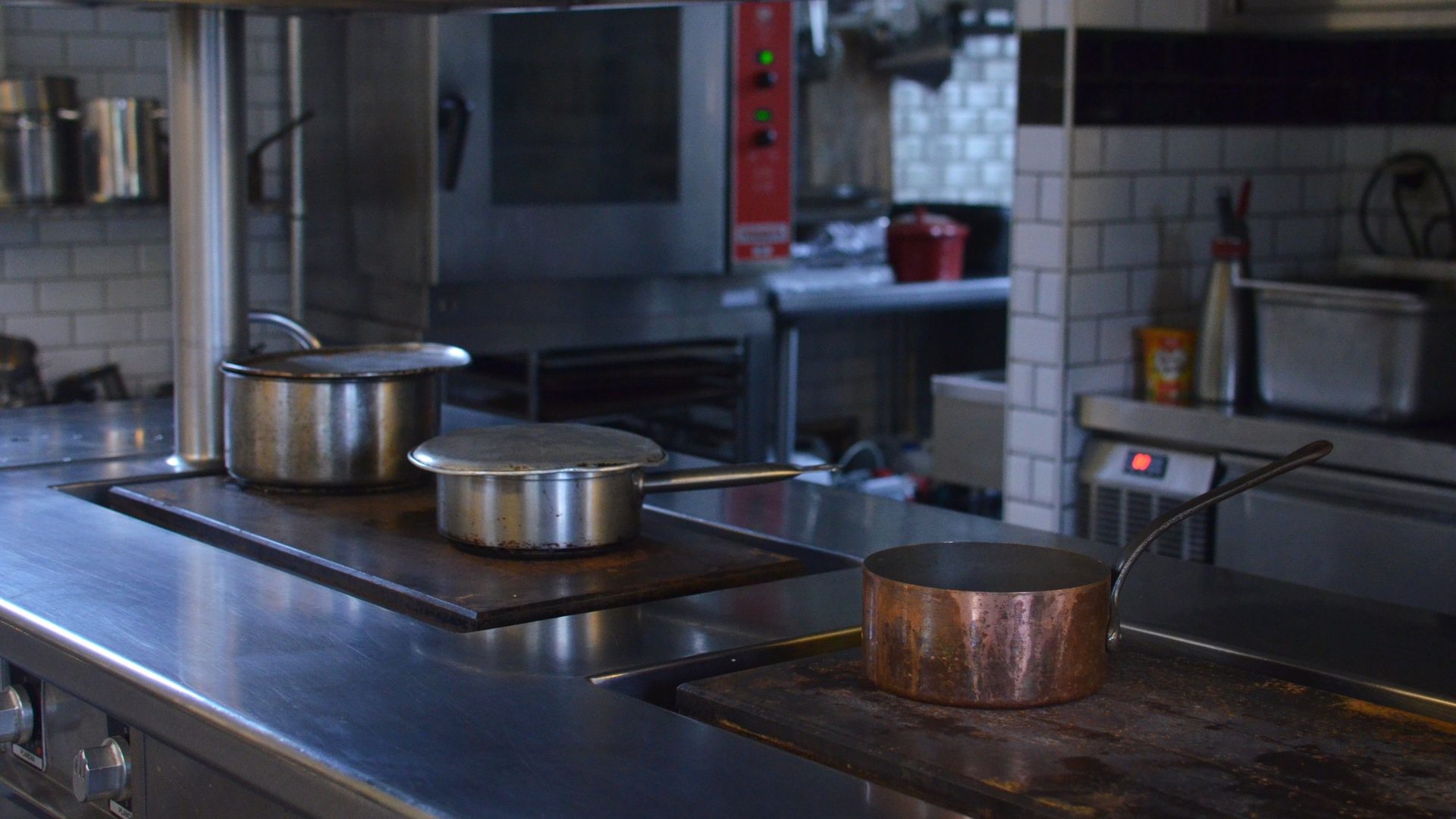
Photo by Skylar Kang on Pexels
Kitchen organization in a restaurant comes down to four agreements: everything has a home, everything has a label, every area has an owner, and every area has a set time it gets put back. Containers and label makers help. They are not the system.
Most kitchens look great on Monday after the deep clean. By Saturday at 9pm the walk-in is stacked like a game of Jenga, the 1/6 pans are wherever they landed, and three cooks are asking where the backup dressing went. Good kitchen organization isn't about how the kitchen looks on its best day. It's about whether it holds up on the busiest one.
Here is how to build systems that survive a full book: storage, labels, stations, ownership and a nightly reset, with a free checklist you can print.
What Kitchen Organization Actually Means
Search the phrase and you get pantry bins and drawer dividers. A restaurant kitchen has a different problem. It isn't one person keeping their own space tidy. It's fifteen people, over three shifts, sharing the same walk-in and the same shelves, most of them in a hurry. So the organization has to live in agreements everyone follows, not in one person's sense of order.
- A home for everything. Every product, pan and tool has one fixed spot, and that spot is written down somewhere anyone can see it.
- A label. On the container it says what it is, when it was made and who made it. On the shelf it says what goes there.
- An owner. A named person for each area. Not "the kitchen," not "whoever's closing."
- A reset. A set time when each area goes back to standard, whether that's every close or once a week.
Miss any one of the four and the other three slowly stop working. A home with no label gets forgotten. A label with no owner gets ignored. An owner with no reset time gets to it "when things slow down," which in a restaurant means never.
Why Organized Kitchens Fall Apart by Friday
Kitchens don't get disorganized in one night. They get there one reasonable shortcut at a time, and every one of them makes sense in the moment.
- The delivery goes wherever there's room. It shows up at 11am during prep, so it gets stacked on the floor or on whichever shelf has space. That shelf is now the wrong shelf.
- "Just for a second" becomes permanent. A sheet tray parked on top of the lowboy is still there on Thursday.
- Every cook has their own system. The morning prep cook puts the herbs on shelf 3. The night crew looks on shelf 2 and makes a new batch.
- The big reorganization never gets written down. The chef spends a Sunday reorganizing the walk-in. It looks great. Nobody wrote down where things now go, so it drifts back within two weeks.
- Nobody owns the shared spaces. Dry storage belongs to everybody, which means it belongs to nobody.
Notice that none of these are about lazy people. They're about missing systems. Fix the system and the same crew keeps the same kitchen organized.
The Walk-In, Dry Storage and Reach-Ins
Storage is where kitchen organization is won or lost, because it's shared by every shift and it's where time disappears. A cook who spends four minutes looking for something in the walk-in, four times a shift, is losing more than an hour a week to hunting. Multiply that by your whole kitchen.
The walk-in
Draw a shelf map and post it on the inside of the walk-in door. Every product type gets a shelf and a position, and the map is the tiebreaker when two people disagree. Newer product goes behind older product when a delivery is put away, so the oldest gets used first. Make that part of receiving, not a separate job someone does later.
Your local health department has specific rules for walk-in storage, including what can be shelved above what. Confirm them with your inspector and build the shelf map around them, so following the map means following the rules without anyone having to remember them.
Dry storage
Heavy items low, things you use every day at waist height, rarely used items up top. Label the shelf edge, not just the product, so it's obvious where things go back. Break down cases as they're shelved and move half-used bags into labeled containers, because an open bag with no home is where dry storage chaos starts.
Reach-ins and lowboys
These belong to a station, and they should hold that station's items only. Organize them off the same setup sheet that tells the cook how to set the line, which we cover in detail in our guide to mise en place. The minute another station starts parking things in there, the cook who owns it starts losing time.
Standardize the containers
Pick a small set of container sizes with lids that fit across sizes, and retire everything else. Four brands of deli cup and a drawer of lids that fit none of them is a small problem you pay for every day.
| Area | Organize it by | Where it usually breaks |
|---|---|---|
| Walk-in | A posted shelf map by product type, oldest product in front | Deliveries stacked on the floor or on whatever shelf has room |
| Dry storage | How often it's used, heavy items low, labeled shelf edges | Open cases and half-used bags with no home |
| Reach-ins and lowboys | The station setup sheet | Other stations parking things "for a minute" |
| Smallwares and dish return | A labeled shelf for each type of pan and tool | Clean pans stacked wherever, so cooks hunt for them at 7pm |
| Cleaning supplies | Their own dedicated area, stocked and labeled | Spray bottles drifting onto prep tables and food shelves |
Labels: The Cheapest System in the Kitchen
A roll of tape and a marker is the highest-return organization tool in a restaurant. It costs almost nothing and it answers the three questions a cook would otherwise have to ask someone: what is this, when was it made, and who made it.
- One label format, everywhere. Item name, date, initials. Same order, same place on every container, so anyone can read it at a glance.
- Tape and a marker at every station and in the walk-in. If labeling means a walk to the office, it won't happen during a push.
- Label the shelf, not just the container. Container labels tell you what something is. Shelf labels tell you where it goes back, which is the part that keeps the kitchen organized.
- Write shelf life into the recipe. How long each item is kept is a standard for you to set with your health department. Put it on the recipe sheet so nobody is guessing.
Day-dot color labels are a good addition if your team finds them faster to read. They don't replace the written date and initials, though.
An organized kitchen on Saturday, not just Monday.
The whole operation in one place, built around the way your restaurant already works. Money stops leaking, your time stops disappearing into follow-up, and every shift leaves a record with a name on it.
Stations: Everything Within One Step
On the line, organization is measured in steps. A well-organized station lets the cook build every plate without leaving it: product in the rail in the order it's used, backups in the lowboy below, tools on a magnetic strip or in a hotel pan, plates in reach.
Two things keep a station that way. The first is a written setup sheet with a photo of the finished station, so it gets set the same way no matter who's on it. The second is where the station physically sits. If the plates are ten steps away, no setup sheet will fix that, and our guide to restaurant kitchen layout covers placing stations so cooks stop walking.
Organized vs. Looks Organized
A kitchen can look spotless and still fall apart at 8pm, because looking organized and being organized are different things. One is a clean kitchen. The other is a kitchen that stays that way without the chef standing over it.
Actually organized
- A shelf map posted on the walk-in door
- Labels on the shelves and the containers
- Deliveries put away by the map, at receiving
- A short reset at every close
- One set of container sizes and lids
- A named owner for every area
Just looks organized
- The chef knows where everything goes
- Labels on containers only
- Cases on the floor until someone has time
- A big weekend reorganization every few months
- Whatever deli cups and lids are around
- "Everybody" keeps it clean
Give Every Area an Owner
Shared space stays organized when one person is answerable for it. That doesn't mean that person does all the work. It means they check it, they fix it when it drifts, and they're the one you ask when it isn't right.
| Area | Owner | Reset | What "done" looks like |
|---|---|---|---|
| Walk-in | Kitchen manager or AM prep lead | Daily after delivery, full reset weekly | Everything on its mapped shelf, labeled, oldest in front, floor clear |
| Dry storage | Opening prep cook | Weekly, the day after the big order | Cases broken down, shelves labeled, nothing on the floor |
| Line stations | The cook on that station | Every close | Matches the photo on the setup sheet |
| Reach-ins and lowboys | The cook on that station | Every close | Only that station's items, all labeled and dated |
| Dish and smallwares | Dishwasher | During lulls and at close | Every pan and tool back on its labeled shelf |
| Cleaning supplies | Closing manager | Weekly | Stocked, labeled and in their own area |
Put the owner's name on the area itself, not just on a spreadsheet, and put the resets on the schedule like any other task. Organization and cleaning overlap here, and our restaurant cleaning schedule covers the daily, weekly and monthly cleaning side of the same routine.
The free kitchen organization checklist
Tick it off on screen, or save it as a PDF and post it by the walk-in. Put an owner's initials next to each section so it's clear who closes it out.
Every close
Every delivery
Weekly
Monthly
Keeping It Together When You're Slammed
Every system above is easy on a Tuesday. The test is a full book with two cooks short. A few rules keep a kitchen organized during the rush instead of just before and after it:
- Nothing on the floor. Not the delivery, not the empty case, not the stockpot "just for a second."
- There is no temporary spot. If it doesn't have a home, it goes back where it came from or it gets a home now.
- Whoever opens it, closes it neat. Pulling something from the walk-in means leaving the shelf the way you found it.
- Clean as you go. Each cook wipes their station and sends pans to dish during every lull, not at close.
- Someone owns the flow of smallwares. The dishwasher or a runner keeps clean pans moving back to the line so cooks never have to hunt.
Then close with a short, non-negotiable reset. Ten minutes at the end of the night is cheaper than the first hour of tomorrow's prep shift spent undoing tonight. Our daily operations checklist shows where that reset fits in the rest of the day, and standard operating procedures are how the shelf map, label format and resets get written down so they outlast the person who set them up.
Kitchen organization is one piece of a wider problem. If it feels like the whole operation runs on memory, our guide to organizing restaurant operations is the place to start, and the complete guide to restaurant operations covers the rest. For industry-wide operating trends, the National Restaurant Association keeps a research library worth bookmarking.
If your kitchen stays organized only as long as someone is standing over it, the system isn't written down anywhere the crew can follow. Crewli is a fully custom operations app shaped around how your restaurant already runs, so every area has an owner, every reset is on the schedule, and you can see what got done without walking the walk-in yourself. Let's talk.
Frequently Asked Questions
How do you organize a restaurant kitchen?
Give every product, pan and tool one fixed home and write it down, with a posted shelf map for the walk-in and a setup sheet with a photo for each station. Label both containers and shelves, assign a named owner to every area, and put a reset time on the schedule for each one: stations every close, the walk-in after each delivery, and full storage resets weekly. The system matters more than the containers you buy.
How should a restaurant walk-in cooler be organized?
Post a shelf map on the inside of the door that gives every product type a fixed shelf and position. Put deliveries away by the map at receiving, with newer product behind older so the oldest gets used first, and keep the floor and aisle clear. Your local health department has rules about what can be stored above what, so confirm those with your inspector and build the shelf map around them.
What is FIFO in a restaurant kitchen?
FIFO stands for first in, first out. When new product arrives, it goes behind or under the product already on the shelf, so the oldest stock gets used first. It is the simplest way to cut spoilage from forgotten product at the back of the walk-in. It works best when it is part of receiving, done by whoever puts the delivery away, rather than a separate rotation job somebody gets to later.
How should food be labeled in a restaurant kitchen?
Use one label format everywhere: item name, the date it was made or opened, and the initials of whoever made it, in the same order and the same spot on every container. Keep tape and a marker at every station and in the walk-in so labeling never requires a walk. Set how long each item is kept with your local health department and write it on the recipe sheet so nobody guesses.
How often should a restaurant kitchen be reorganized?
If the system is working, you should rarely need a big reorganization. Stations reset every close, the walk-in after every delivery, and storage areas get a full reset weekly. Once a month, walk every area against the shelf map and fix whatever has drifted. A kitchen that needs a major reorganization every few months usually has no written map or owners, so it slides back to where it was.
How do you keep a kitchen organized during a busy service?
Set a few hard rules: nothing goes on the floor, there is no temporary spot, whoever pulls something from the walk-in leaves the shelf the way they found it, and cooks clean as they go during every lull. Give the dishwasher or a runner the job of moving clean pans back to the line. Then close with a short reset every night so the next shift starts organized.
What is the difference between kitchen organization and kitchen layout?
Kitchen layout is the physical design: where stations, equipment, storage and dish sit and how food flows between them. It is mostly fixed when the kitchen is built. Kitchen organization is how you run the space you have: where product lives, how it is labeled, who owns each area and when it gets reset. A good layout makes organization easier, but even a great layout falls apart without the daily system.