
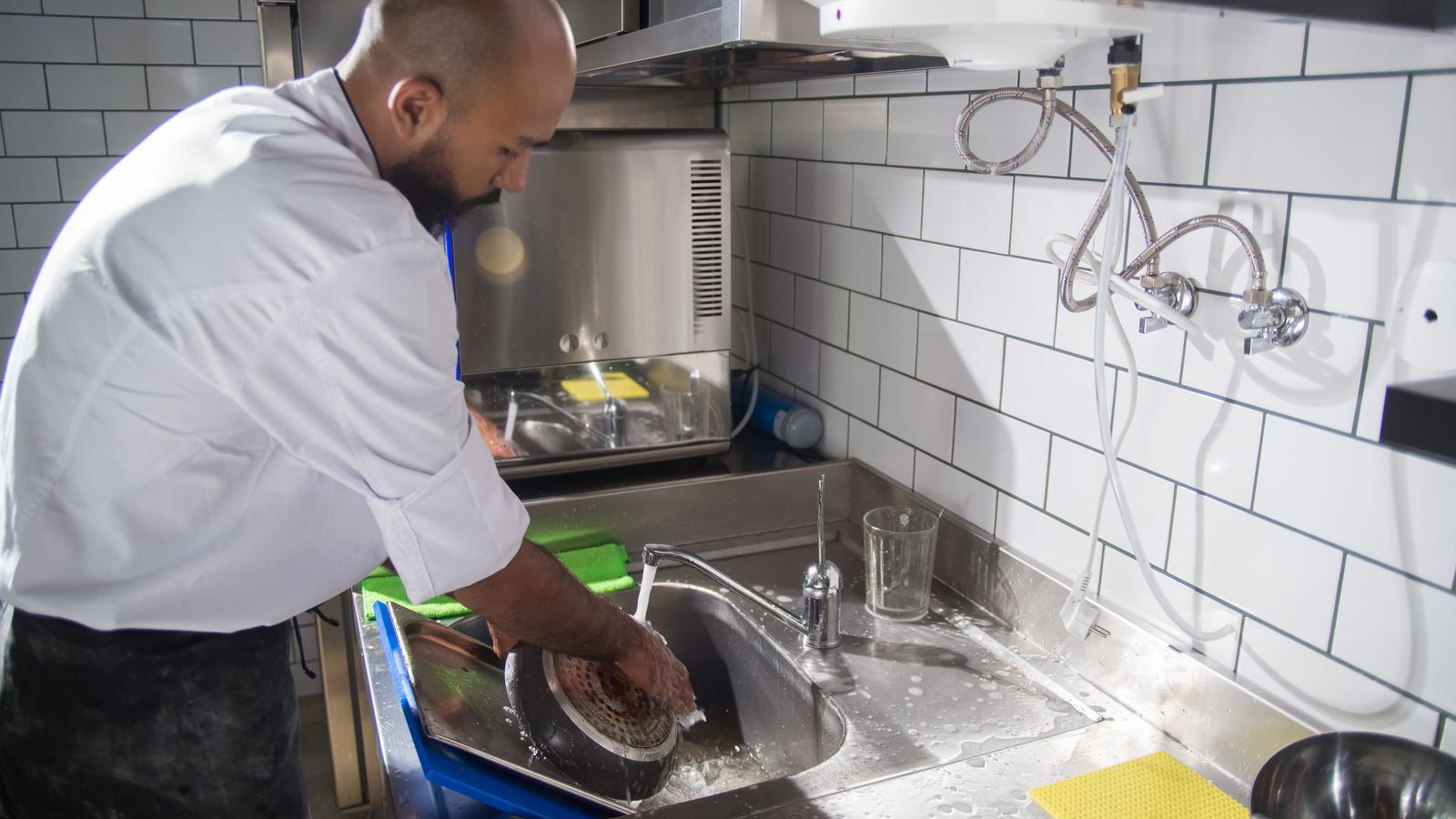
Photo by Kampus Production on Pexels
Nobody fails a health inspection on the stuff they clean every night. They fail on the hood filters that haven't been pulled since spring, the reach-in gaskets going black at the seam, the condenser coils behind the walk-in caked in dust. The daily stuff gets done because it's obvious and someone's standing in it. The rest slides quietly for months until an inspector opens a door.
A restaurant cleaning schedule exists to catch exactly that. Not the wiping-down-the-line part, which happens on its own, but the intervals nobody remembers: the weekly fryer boil-out, the monthly hood detail, the quarterly grease trap. A schedule assigns every one of those a frequency, a shift, and a name, and it's the difference between a kitchen that's clean and a kitchen that only looks clean at eye level.
Below is the full breakdown by frequency, who should own each task, how to get a crew to actually follow it, and a free schedule you can tick off on this page and save as a PDF.
Why a Schedule Beats a Checklist
Most restaurants have a cleaning checklist. Very few have a cleaning schedule, and the gap between the two is where the violations live.
A checklist tells you what. A schedule tells you what, how often, and who. That sounds like a small distinction until a Saturday night runs long and the closing crew is deciding what to skip. A checklist gives them a menu of tasks with no priority, so they do the visible ones and go home. A schedule says the hood filters come out on the first Monday and Marcus owns it, which means when the first Monday passes and the filters are still greasy, that's a specific person and a specific failure rather than a vague sense that the kitchen's getting dirty.
The same principle runs through every system that actually holds in a restaurant. A task without an owner and an interval isn't a standard, it's a hope. That's the core argument in our guide to writing standard operating procedures, and cleaning is the place it shows up fastest.
The Daily Cleaning Schedule
Daily cleaning splits into three blocks, and the reason to separate them is that they get done by different people at different times. Lumping them into one list is how the during-service items get quietly dropped.
| Block | Tasks |
|---|---|
| Open | Sanitize prep surfaces and cutting boards. Set up fresh sanitizer buckets and test strips. Wipe down the line and reach-in handles. Stock and check restrooms. Check walk-in and reach-in temps and log them. Wipe down FOH tables, menus, and door handles. |
| During service | Change sanitizer water and rotate cloths on a fixed cycle. Clean and sanitize food-contact surfaces on schedule, not "when they look dirty." Wipe spills immediately. Check restrooms hourly. Bus and sanitize tables between covers. Empty trash before it overflows. |
| Close | Break down and clean the entire line. Degrease flat top, grill, and fryer surrounds. Scrape and clean the grill. Clean the exterior of the hood and the grease-catch area. Sanitize all prep tables. Run the final dish load and drain the machine. Sweep and mop every floor, including under the line. Take out all trash and cardboard. Clean and sanitize FOH tables, bar top, and POS screens. Log temps. |
The during-service block is the one that quietly slips. Open and close are events, so they get done. Mid-service cleaning competes with a full board and a printer that won't stop, which is exactly why it needs to run on a set cycle rather than on someone's judgment about whether a surface looks dirty yet. Put the sanitizer bucket and cloth rotation on a fixed interval, write that interval down, and it stops being a decision anyone has to make at 7:30 on a Saturday.
Daily cleaning should slot straight into your open and close routines rather than living as a separate document nobody picks up. If you already run a daily operations checklist, the cleaning tasks belong inside it, at the point in the shift where they actually happen.
The cleaning gets done whether you’re there or not.
The whole operation in one place, built around the way your restaurant already works. Money stops leaking, your time stops disappearing into follow-up, and every shift leaves a record with a name on it.
The Weekly Cleaning Schedule
Weekly tasks are the ones that don't need daily attention but turn into a real problem if they slide for a month. Assign each to a specific day so they don't all pile onto Sunday.
| Area | Task |
|---|---|
| Walk-in / reach-ins | Empty, wipe down shelving, sanitize, reorganize by date. Detail the door gaskets, where mold shows up first and inspectors look early. |
| Fryer | Full boil-out. Filter or change oil per your schedule and log it. |
| Dish area | Delime the dish machine and the sinks. Clean spray arms and check the jets. |
| Ice machine | Clean the exterior and scoop holder, inspect the interior bin for scale or slime. |
| Coffee & bar | Descale coffee and espresso equipment. Deep-clean beer lines per your vendor's interval, soda guns, and speed rails. The full open, close, and deep-clean list for behind the bar lives in our bar cleaning checklist. |
| Floors | Wash floor mats. Degrease the kitchen floor properly, including the drains and under the line. |
| Behind the line | Pull the lighter equipment and clean behind and under it. Wipe walls and splash zones. |
| Dry storage | Wipe shelves, rotate stock, check for pest activity and damaged packaging. |
Monthly and Quarterly Deep Cleans
These are the tasks nobody thinks about until an inspector or a fire marshal does. They're also the ones that cost real money when they're skipped, because grease buildup in a hood system isn't a cleanliness problem, it's a fire problem.
| Interval | Tasks |
|---|---|
| Monthly | Deep-clean hood filters and the range hood surfaces. Pull heavy equipment and clean behind it. Descale and sanitize the ice machine interior. Clean walk-in fan guards and condenser coils. Wash kitchen walls and ceiling tiles. Clean and reset dry storage completely. Wipe down light fixtures and vents. |
| Quarterly / semi-annual | Professional hood and duct cleaning by a certified vendor (keep the certificate). Grease trap pump-out. Pest-control inspection. HVAC and vent servicing. Deep-clean or replace floor drains and check for backups. Full equipment service and calibration. |
Two rules for this tier. Put every one of these on a calendar with a date and a name, not a "roughly monthly" understanding. And keep the paperwork: the hood-cleaning certificate, the grease trap receipt, the pest-control report. When an inspector asks, "when was this last done," the right answer is a document, not a guess.
Who Owns What
This is where most cleaning schedules quietly fail. The tasks are right, the intervals are right, and every line is assigned to a department instead of a person.
Assign it like this
- "Hood filters, first Monday, Marcus, verified by the closing manager."
- "Walk-in reset, Tuesday AM, prep cook on shift."
- "Fryer boil-out, Sunday close, closing line cook."
- "Grease trap, quarterly, GM books the vendor and files the receipt."
Not like this
- "Hood filters, monthly, kitchen."
- "Walk-in, weekly, BOH team."
- "Fryer, as needed."
- "Grease trap, when it starts to smell."
The left column is a standard. The right column is a wish. "The kitchen" cleaning the hood filters means nobody cleans the hood filters, because a task shared by everyone is owned by no one. Put a name against every line, and put the manager on duty's initials at the bottom to confirm it happened. The same rule keeps storage in order, and our guide to kitchen organization applies it to the walk-in, dry storage and stations.
That verification step matters more than the list itself. A manager who signs off without walking the line is teaching the crew that the sheet is decoration, and once that lesson lands you'll never get it back. Consistent follow-through on standards like this is one of the quieter parts of a manager's core responsibilities, and it's what separates a kitchen that holds from one that drifts.
How to Make the Schedule Stick
A schedule that gets printed, posted, and ignored is worse than no schedule at all, because now you think you're covered. Three things make the difference:
- Post it where the work happens. The cleaning schedule belongs on the wall by the dish pit and the line, not in a binder in the office. If someone has to walk to find out what they're supposed to clean, they won't.
- Time it honestly. If your close-out schedule genuinely takes 90 minutes and you've given the crew 45, they will start skipping items and initialing them anyway. You haven't saved labor, you've bought yourself a dirty kitchen and a team that's learned to lie on a form. Time the tasks for real, then staff the close accordingly.
- Verify at close, every close. A manager walks the line and signs. Not a glance from the pass, an actual walk. The signature is the whole enforcement mechanism.
- Train it once, properly. "Clean the slicer" means seven different things to seven cooks. Show the standard once during staff training and you stop relitigating it every week.
- Log the deep cleans. Note them on the shift report so there's a dated record you can look back on when an inspector or an insurer asks.
The Free Restaurant Cleaning Schedule
Here's the whole thing in one place. Tick it off on this page and hit Save as PDF, and your browser will export just the schedule, clean and ready to post. Or print a stack and keep them on a clipboard by the dish pit.
Restaurant Cleaning Schedule
Daily: Open
Daily: During service
Daily: Close
Weekly
Monthly
Quarterly / semi-annual (book it, file the paperwork)
This is a general operational template. Health-code requirements vary by state and county, so confirm the exact rules and intervals with your local health department.
Adapt the intervals to your equipment and volume. A high-volume fry program may need a twice-weekly boil-out, and a bar-forward room will need tighter line cleaning than the schedule above assumes. What shouldn't change is the structure: every task has a frequency, a name, and a signature. For broader food-safety and operations standards, the National Restaurant Association is a good reference, and the whole system sits inside the bigger picture we lay out in the restaurant operations guide.
If you'd rather your cleaning schedule lived somewhere you can actually see (assigned by name, timestamped when it's done, and impossible to initial from the pass without doing the work), that's exactly what we build. Let's talk about what that would look like in your kitchen.
Frequently Asked Questions
What is a restaurant cleaning schedule?
A restaurant cleaning schedule is a written plan that assigns every cleaning task in the building to a frequency (daily, weekly, monthly, or quarterly), a shift, and a named person. It's different from a cleaning checklist, which only lists what needs doing. The schedule answers the two questions a checklist leaves open: how often, and whose job is it. That's why a schedule survives a busy Saturday and a checklist doesn't.
What should be cleaned daily in a restaurant?
Daily cleaning breaks into three blocks. At open: sanitize prep surfaces and cutting boards, set up sanitizer buckets, wipe down the line, check restrooms. During service: change sanitizer water and rotate cloths, clean food-contact surfaces on a regular cycle, wipe spills immediately, check restrooms hourly. At close: break down and clean the line, degrease the flat top and fryer surrounds, clean the grease trap area, sweep and mop all floors, take out trash, sanitize prep tables, and run the last dish load.
How do you build a restaurant cleaning schedule from scratch?
Start by walking the building and writing down every surface, piece of equipment, and area that needs cleaning, without worrying yet about how often. Then sort that list into daily, weekly, monthly, and quarterly buckets based on how fast each one actually gets dirty in your operation. Assign every line to one named person and one shift. Time the daily blocks honestly so the close is finishable, and have the manager on duty sign off. Adjust the intervals over the first month based on what you find, not on what a template told you.
What should be cleaned weekly in a restaurant?
Weekly tasks are the ones that don't need daily attention but become a real problem if they slide for a month. Empty, sanitize, and reorganize the walk-in. Boil out the fryer. Delime sinks and dish machine. Clean the ice machine exterior and check the interior. Descale coffee equipment. Wash floor mats. Clean behind and under the line equipment. Wipe walls and splash zones. Detail the reach-in gaskets, which is where mold shows up first and inspectors look early.
What needs deep cleaning monthly or quarterly?
Monthly: deep-clean the hood filters and range hood, pull and clean behind all heavy equipment, descale and sanitize the ice machine interior, clean walk-in fan guards and condenser coils, and wash the walls and ceilings in the kitchen. Quarterly and semi-annual: professional hood and duct cleaning by a certified vendor, grease trap pump-out, pest-control inspection, HVAC and vent servicing, and a full dry-storage reset. These are the tasks nobody thinks about until an inspector or a fire marshal does.
Who is responsible for cleaning in a restaurant?
Every task should have one name against it, not a department. "The kitchen" cleaning the hood filters means nobody cleans the hood filters. Assign daily line cleaning to the cook on that station, close-out floors and trash to the closing dish or porter, walk-in resets and fryer boil-outs to a named weekly owner, and deep cleans to a specific person on a specific date. The manager on duty verifies and signs off. That signature is what turns a schedule from a suggestion into a standard.
How do you get staff to actually follow a cleaning schedule?
Three things. Make it visible: post it where the work happens, not in an office binder. Make it verified: a manager signs off at close, every close, and actually walks the line rather than initialing a sheet. And make it fair: if the schedule is impossible to finish in the time allotted, staff will start skipping items and lying about it, and you'll have taught your team that the paperwork is optional. Time the tasks honestly, then hold the line on them.