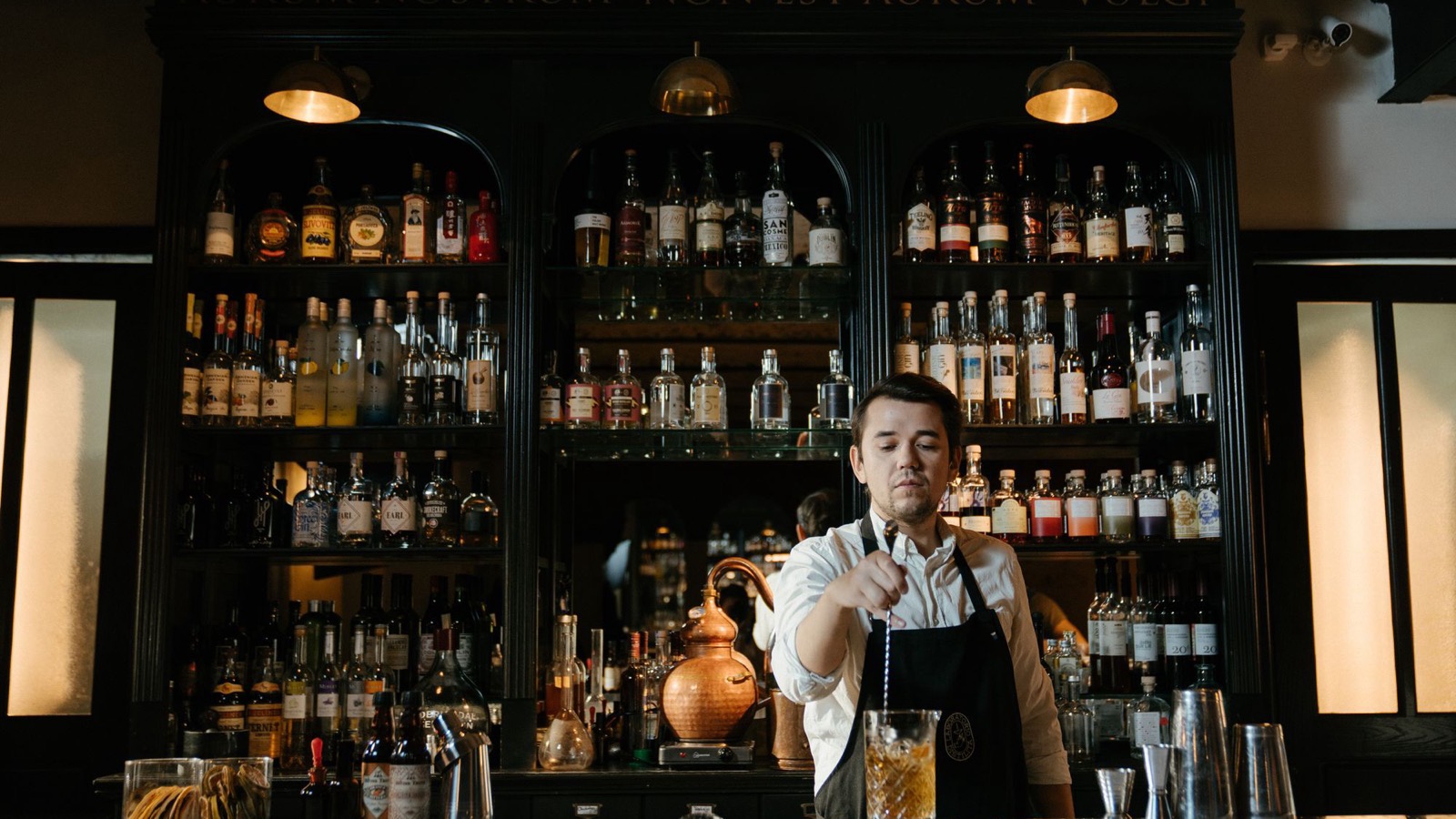
Photo by cottonbro studio on Pexels
Most bartender job postings could be for any bar in the country. "Outgoing personality. Fast-paced environment. Cocktail knowledge a plus." The bartenders you actually want, the ones who can run a three-deep bar and keep the service well moving at the same time, read that and keep scrolling.
A good bartender job description reads like the real shift. It says what the bar does: a high-volume beer and shot bar, a craft cocktail program, or a restaurant bar that mostly feeds the dining room. It is honest about the setup, the closing work and the hours. And it tells a bartender exactly how they will be paid. That honesty does the filtering for you.
Below: what a bartender actually does, how the role differs from a barback, the duties and skills that belong on the description, how to write one that attracts the right people, a free template you can copy or save as a PDF, and how to turn the description into the way your bar actually runs.
What a Bartender Actually Does
A bartender runs the bar: making and serving drinks for guests at the bar, filling drink tickets for the dining room, and keeping the station stocked, clean and ready. In most restaurants they also take food orders from bar guests, so the job is part server and part drink maker.
What separates a good bartender from an average one is not how many cocktails they know. It is consistency and control. The same pour every time, so your liquor cost holds. Service tickets that come out fast, so the dining room doesn't wait on drinks. Bar guests who feel looked after even when every seat is full. And a bar that is set up properly before the doors open, so none of that falls apart at 8pm.
Be clear about what kind of bar you run, because the job changes a lot depending on the answer. A bartender who thrives slinging beer and shots at volume may struggle with a 12-ingredient cocktail menu, and the reverse is just as true. Getting that clear up front is the first step in any solid restaurant hiring process.
Bartender Duties and Responsibilities
Like any restaurant role, bartender duties split cleanly into three parts of the shift. This structure goes straight onto the description.
| Phase | Core responsibilities |
|---|---|
| Before service | Set up the bar, cut and prep garnishes, batch syrups and juices, fill ice, stock the wells and coolers to par, check draft lines and glassware, and learn any menu changes or 86'd items. |
| During service | Greet and serve bar guests, take food and drink orders, make drinks to the house recipe and pour, fill service tickets for the dining room quickly, suggest drinks and pairings, log comps and waste, follow your restaurant's ID policy, and keep the bar clean as you go. |
| After service | Close out tabs, run the end-of-shift count or report, restock to par, break down and clean the bar, store garnishes and mixers, and leave notes for the opening bartender. |
Two duties get left off most postings, and they matter more than they look. The first is the service well. In a restaurant, a big share of the bar's drinks may go to the dining room, and a bartender who ignores service tickets to chat with bar guests slows down every table in the house. The second is logging comps and waste. A bar that doesn't track what gets spilled, remade or given away has no idea where its liquor cost is going. Spell both out on the description.
Your best shift, every shift.
- Protect your revenue
- Give your managers their time back
- Lower your risk with clear standards
- Hold everyone accountable
Bartender vs Barback
A barback supports the bartender so the bartender can stay at the bar making drinks. If you are hiring for both roles, write two descriptions, because the jobs are different.
- A barback keeps the bar running: hauling ice, changing kegs, restocking beer, liquor and mixers, washing and polishing glassware, cutting backup garnishes, emptying trash and helping with closing cleaning. Most barbacks don't make drinks for guests.
- A bartender owns the guests and the drinks: taking orders, making drinks to spec, handling tabs and payment, and running the service well.
Barback is also one of the best ways to grow your own bartenders. Someone who has spent six months keeping your bar stocked already knows where everything lives, how the rush feels, and how your bartenders work. If that is a path you offer, say so in the barback description. It attracts people who want to stay.
Bartender Skills: Must-Haves vs Nice-to-Haves
A long list of requirements scares off good bartenders and attracts nobody. Split what a bartender truly needs from what is just a bonus.
| Must-have | Nice-to-have |
|---|---|
| Speed and composure when the bar is full | Craft cocktail or classic cocktail experience |
| Consistent pours and following house recipes | Wine, beer or spirits knowledge beyond the menu |
| Warm with guests, and able to read a room | Experience with your POS system |
| Keeps the bar clean and organized during service | High-volume or nightlife background |
| Handles cash, tabs and payments accurately | A second language for your guest base |
| Reliable: on time, every shift | Any certification your area asks for, already in hand |
Notice what is missing from the must-have column: years of experience and a long list of cocktails. You can teach your drink menu. You cannot easily teach someone to stay calm, accurate and friendly with a full bar and a stack of service tickets. A short working interview behind your bar shows you more than any résumé, and our guide to restaurant interview questions covers what to ask before you get there.
How to Write One That Filters Right
The goal is not the most applicants. It is the right ones, with the wrong ones deciding on their own not to apply.
Write it like this
- "12-seat restaurant bar, plus all drinks for a 90-seat dining room."
- "Opening setup: garnishes, syrups, ice, stock to par. Closing: counts, restock, full breakdown."
- "Classic cocktails built to our recipes, measured pours."
- "$[X]/hr plus tips. Here's how tips work here: [explain]."
- "Tell us about the busiest bar shift you've worked."
Not that
- "Looking for a rockstar mixologist!"
- "Other duties as assigned."
- (Nothing about setup, closing or the service well.)
- "Amazing tips!"
- "Must have 5+ years experience."
A few rules that hold for every good bartender listing:
- Describe the bar. Seats, volume, the drink program, and whether the bar also covers the dining room.
- Be clear about pay. List the base rate and explain how tips are handled at your restaurant. For a sense of what bartenders earn, see the Bureau of Labor Statistics page on bartenders, then price to your own market. Pay, tip and certification rules vary by state and city, so confirm yours with your accountant or attorney before you post.
- Be honest about the hard parts. Late closes, weekends, holidays, heavy lifting and a lot of time on your feet.
- Write out the opening and closing work. Setup and breakdown are a real part of the job. Bartenders who know about them up front are far less likely to skip them.
- Make applying easy. One or two questions a real bartender can answer in a sentence beat a long form.
Hiring for the dining room too? Our server job description follows the same approach for front of house, and the line cook job description covers the kitchen.
The Free Bartender Job Description Template
Copy this into your job post and replace the [bracketed] fields with your details, or hit Save as PDF to keep a clean copy for your hiring file.
Bartender Job Description Template
Bartender | [Restaurant Name]
Location: [City / neighborhood] • Schedule: [e.g. Wed–Sat, 4pm–close] • Pay: [$X/hr base plus tips. How tips work here: ...]
About the role
[Restaurant Name] is a [concept, e.g. busy neighborhood restaurant with a classic cocktail program] looking for a bartender to run our [12]-seat bar and make drinks for the [90]-seat dining room. If you like a full bar and take pride in getting every drink right, you'll fit in here.
What you'll do
- Before service: set up the bar, cut garnishes, batch syrups and juices, fill ice, and stock the wells and coolers to par.
- During service: take care of bar guests, fill service tickets quickly, make drinks to our recipes and pours, log comps and waste, and keep the bar clean as you go.
- After service: close out tabs, run the end-of-shift count, restock, break down and clean the bar, and leave notes for the next shift.
What you bring
- Speed and composure when the bar is full
- Consistent pours and the discipline to follow house recipes
- Warmth with guests and the ability to read a room
- Accuracy with cash, tabs and payments
- Reliability: you show up on time, ready to work
- [Alcohol server certification, if required in your area]
The real conditions
You'll be on your feet for [6 to 9] hours, lifting cases and ice, and working late. Nights, weekends and holidays are part of the schedule.
How to apply
Send your availability and a sentence or two about the busiest bar shift you've worked. [Application link or email]
Beyond the Hire: Turning the Description Into the Shift
A job description is a promise. You told a new bartender the job is "set up to par, follow our recipes and pours, log comps and waste." On their first Friday, that promise either becomes the way the bar runs or turns into "watch how Mike does it."
When it turns into the second one, you get a familiar pattern. Every bartender pours a little differently. The garnish tray is set up one way on Tuesday and another on Saturday. Nobody logs the remakes, so liquor cost drifts and nobody can say why. A good hire never gets settled, and leaves. That is one of the quiet drivers of restaurant staff turnover.
The fix is to turn each line of the description into something the bartender actually works from:
- "Follow our recipes" becomes a drink spec sheet with build, pour, glass and garnish for every drink, available behind the bar.
- Setup and closing become checklists with a name and a time on them. Our bar cleaning checklist covers the opening and closing side.
- "Stock to par" becomes a par sheet that ties into your liquor ordering and inventory counts.
- "Log comps and waste" becomes a simple log reviewed every week, so liquor cost has an explanation.
- The first two weeks become a plan, not a shadow shift. A clear onboarding process does most of the work.
Write the honest description, hire for consistency, then give that bartender a system that makes doing it right the easy path. If you want that system built around how your bar already runs, with drink specs, opening and closing checklists and logs in one app your team actually uses, let's talk.
Frequently Asked Questions
What does a bartender do in a restaurant?
A bartender runs the bar. They take care of guests seated at the bar, make drinks to the house recipes, fill drink tickets for the dining room, and often take food orders from bar guests. Before service they set up the bar, prep garnishes and stock to par. After service they close out tabs, run the end-of-shift count, restock, and break down and clean the bar for the next shift.
What are the main duties of a bartender?
Bartender duties fall into three parts of the shift. Before service: set up the bar, cut garnishes, batch syrups and juices, fill ice and stock to par. During service: serve bar guests, fill service tickets for the dining room, make drinks to spec with consistent pours, log comps and waste, and keep the bar clean. After service: close out tabs, count, restock, and break down and clean the bar.
What skills does a bartender need?
The must-haves are speed and composure when the bar is full, consistent pours, the discipline to follow house recipes, warmth with guests, accuracy with cash and tabs, and reliability. Cocktail knowledge, spirits and wine knowledge, and POS experience all help, but most of that can be taught. Hire for consistency and composure first, and teach the drink menu.
What is the difference between a bartender and a barback?
A bartender takes care of guests and makes the drinks. A barback supports the bartender so they can stay at the bar: hauling ice, changing kegs, restocking liquor, beer and mixers, washing glassware, cutting backup garnishes and helping with closing cleaning. Most barbacks don't serve guests directly. Barback is also a common path to becoming a bartender, so it is worth mentioning if you offer that path.
What should a bartender job description include?
A strong bartender job description includes a short, honest summary of the role; a description of the bar, including seats, volume, the drink program and whether it serves the dining room; duties split into setup, service and closing; must-have skills kept separate from nice-to-haves; the physical side and the hours; clear pay information, including how tips are handled; and a simple way to apply.
Do you need experience to be a bartender?
It depends on the bar. Many restaurants promote barbacks or servers into bartending and train them on the drink menu, while busy cocktail bars usually want someone who has already handled a full bar. Decide what you actually need before posting and say it plainly. Composure, consistency and reliability usually predict success better than years on a résumé, which is why a short working interview is so useful.
What should a barback job description include?
A barback job description should cover the support work: stocking ice, liquor, beer and mixers to par, changing kegs, washing and polishing glassware, cutting backup garnishes, keeping the bar and floor clear, and helping with opening and closing. Be honest about the physical side, since the job involves a lot of lifting and moving fast. If barbacks can grow into bartending at your restaurant, say so.