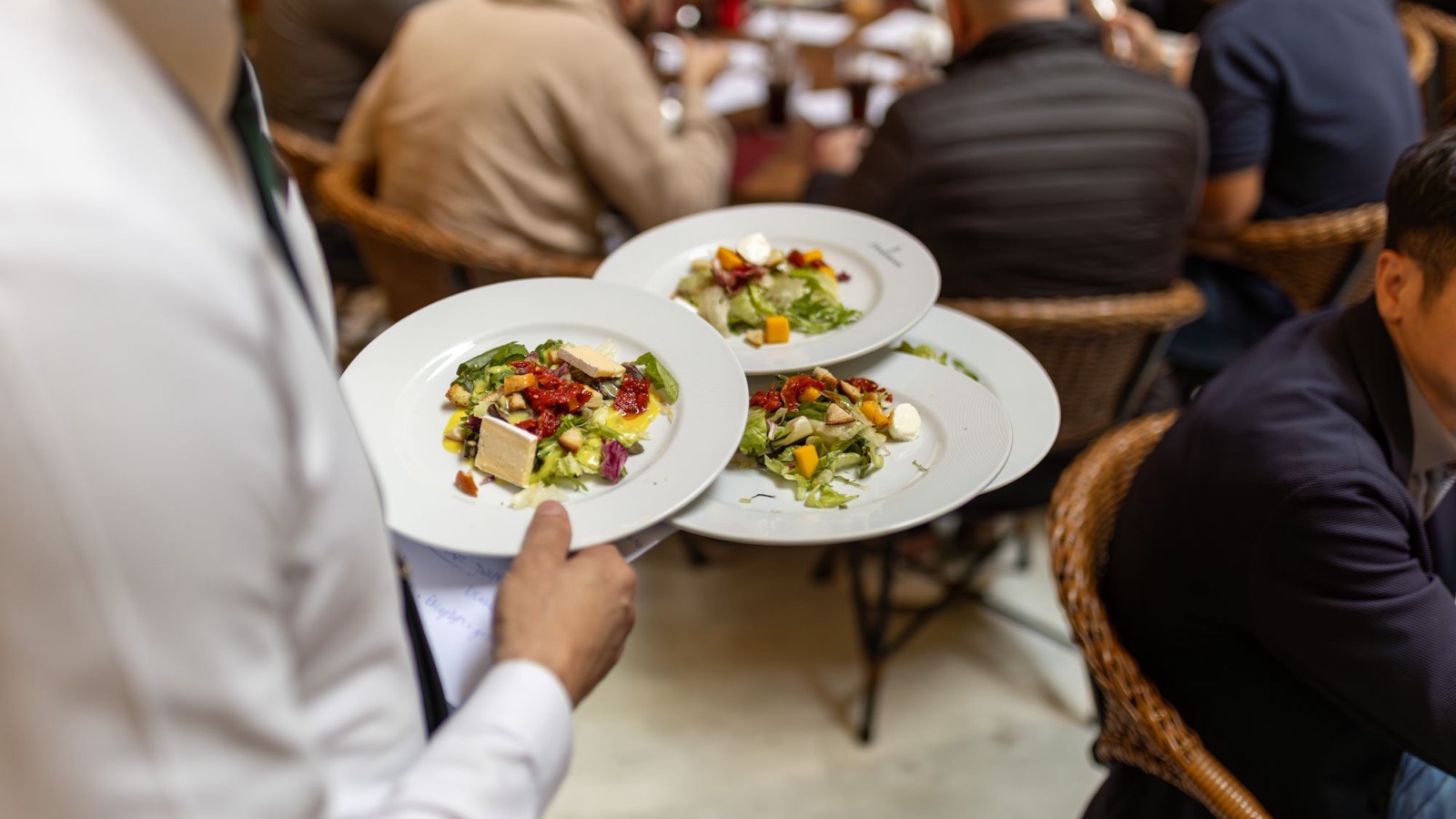
Photo by Matheus Bertelli on Pexels
Most server job postings say the same four things. "Friendly. Team player. Fast-paced environment. Great tips." Every restaurant on the street posts that exact listing, so the servers you actually want, the ones who can run a six-table section on a Friday without dropping a single drink order, have no reason to pick yours.
A good server job description reads like the real shift. It names the section size, the volume and the sidework. It is honest about the pace and the hours. And it tells a server exactly how they will be paid. That honesty does the filtering for you, before you spend a single interview on the wrong person.
Below: what a server actually does, the duties and skills that belong on the description, how to write one that attracts the right people, a free template you can copy or save as a PDF, and how to turn the description into the way your floor actually runs.
What a Server Actually Does
A server owns a section of the dining room and everything that happens to the guests in it, from the first greeting to the closed check. They take orders, guide guests through the menu, time courses with the kitchen, and make sure every table leaves happy enough to come back.
The part most postings leave out is how much of the job happens away from the table. A server is also a salesperson, a timekeeper, and the person the kitchen relies on to ring orders in correctly. A great server makes the line's night easier. A sloppy one sends back food that was cooked exactly as it was rung in.
Be clear about where the role starts and stops in your restaurant, because it varies a lot. In some places servers run their own food, bus their own tables and pour their own wine. In others, food runners, bussers and a bartender handle those jobs. Your description should say which model you run, so applicants know what they are signing up for. That clarity is the first step in any solid restaurant hiring process.
Server Duties and Responsibilities
The clearest way to write server duties is the same way the shift actually runs: before service, during service, and after. This structure goes straight onto the description.
| Phase | Core responsibilities |
|---|---|
| Before service | Set up the section, complete opening sidework, check menu changes and 86'd items, attend pre-shift, and know the specials well enough to describe them without reading. |
| During service | Greet tables promptly, take accurate orders, guide guests through the menu and suggest pairings or add-ons, ring orders in correctly, time courses with the kitchen, check back, handle problems early, and process payments. |
| After service | Close out checks, complete closing sidework, restock stations, reset the section, and hand off anything the next shift needs to know. |
Sidework belongs in the description, written out, not hidden behind "other duties as assigned." It is a real part of the job, and servers who know about it up front complain about it far less. If a new hire needs to learn the language of the floor and the kitchen, like what 86 means, that belongs in training, not on the job post.
Sidework that gets done the same way, no matter who's closing.
The whole operation in one place, built around the way your restaurant already works. Money stops leaking, your time stops disappearing into follow-up, and every shift leaves a record with a name on it.
Server Skills: Must-Haves vs Nice-to-Haves
The fastest way to scare off good servers is a wall of requirements. Split what a server truly needs on day one from what is just a bonus, and be honest about which is which.
| Must-have | Nice-to-have |
|---|---|
| Warm with guests, even on a rough night | Experience with your cuisine or concept |
| Can juggle several tables without losing track | Wine, beer or cocktail knowledge |
| Accurate order taking and POS entry | Experience with your POS system |
| Reads a table and adjusts the pace | Fine-dining or high-volume background |
| Reliable: on time, every shift | A second language for your guest base |
| Communicates clearly with the kitchen | Any certification your area asks for, already in hand |
Look at the must-have column. It is almost entirely temperament and organization, and almost none of it is experience. You can teach a server your menu in a week. You cannot teach them to stay calm and kind with six tables waiting. That is why a paid trial shift tells you more than any résumé, and why the questions you ask matter. Our guide to restaurant interview questions covers what to ask and what to watch for.
How to Write One That Filters Right
The goal is not the most applicants. It is the right ones, with the wrong ones deciding on their own not to apply. A description written like the real shift does that automatically.
Write it like this
- "Dinner service, 4 to 5 table sections, about 150 covers on a Friday."
- "Opening and closing sidework: rolling silverware, restocking stations, resetting the section."
- "On your feet for 6 to 8 hours, carrying full trays."
- "$[X]/hr plus tips. Here's how tips work here: [explain]."
- "Tell us about a busy shift you handled well."
Not that
- "Join our restaurant family!"
- "Other duties as assigned."
- (Nothing about the physical side of the job.)
- "Great earning potential!"
- "Must have 3+ years experience."
A few rules that hold for every good server listing:
- Name the shift, section size and volume. "Server" is vague. "Weekend brunch, 5-table sections, 200 covers" is a job someone can picture.
- Be clear about pay. List the base rate and explain how tips are handled at your restaurant. "Great tips" with no detail reads as a red flag to experienced servers. For a sense of what servers earn, check the Bureau of Labor Statistics page on waiters and waitresses, then price to your own market. Wage and tip rules vary by state and city, so confirm yours with your accountant or attorney before you post.
- Be honest about the hard parts. Weekends, holidays, long hours on your feet, and the occasional difficult guest. Saying it plainly earns trust.
- Keep requirements short. Every requirement you don't really need quietly removes good applicants.
- Make applying easy. One or two questions a real server can answer in a sentence beat a long form.
Hiring for the kitchen too? Our line cook job description follows the same approach for the back of house.
The Free Server Job Description Template
Copy this into your job post and replace the [bracketed] fields with your details, or hit Save as PDF to keep a clean copy for your hiring file.
Server Job Description Template
Server | [Restaurant Name]
Location: [City / neighborhood] • Schedule: [e.g. Thu–Sun dinner, 4pm–close] • Pay: [$X/hr base plus tips. How tips work here: ...]
About the role
[Restaurant Name] is a [concept, e.g. busy neighborhood bistro] looking for a server to run a [4 to 5] table section during [dinner / brunch] service, roughly [150] covers on a busy night. If you like a full section and take pride in getting every detail right, you'll fit in here.
What you'll do
- Before service: set up your section, finish opening sidework, learn the specials and any 86'd items, and join pre-shift.
- During service: greet tables quickly, take accurate orders, guide guests through the menu, ring orders in correctly, time courses with the kitchen, and check back.
- After service: close out your checks, finish closing sidework, restock, and reset your section for the next shift.
What you bring
- Warmth with guests, even when the room is slammed
- The organization to juggle several tables at once
- Accurate order taking and clear communication with the kitchen
- Reliability: you show up on time, ready to work
- [Food handler or alcohol server certification, if required in your area]
The real conditions
You'll be on your feet for [6 to 8] hours, carrying trays and moving fast. Nights, weekends and holidays are part of the schedule.
How to apply
Send your availability and a sentence or two about the busiest shift you've worked. [Application link or email]
Beyond the Hire: Turning the Description Into the Shift
Here is what most server job description articles skip. The description is a promise. You told a new server the job is "set up your section, finish sidework, know the specials." On their first Friday, that promise either becomes the way the floor runs, or it turns into "shadow whoever's on and figure it out."
When it turns into the second one, you get a familiar pattern. Sidework gets done three different ways depending on who closed. Nobody told the new server about the menu change. A good hire never quite gets comfortable, and leaves inside a couple of months. That isn't a bad server. It's a job description that never got connected to the operation, and it is one of the quiet drivers of restaurant staff turnover.
The fix is to turn each line of the description into something the server actually works from:
- Opening and closing sidework becomes a checklist with a name and a time on it, so it gets done the same way every shift.
- "Know the specials" becomes a pre-shift note everyone can pull up, with 86'd items updated in real time.
- "Guide guests through the menu" becomes a menu guide with descriptions, allergens and suggested pairings, not something learned by ear.
- The first two weeks become a plan, not a shadow shift. A clear onboarding process and a simple new hire welcome packet do most of the work.
Write the honest description, hire for temperament, then give that server a system that makes doing it right the easy path. If you want that system built around how your floor already runs, with sidework checklists, pre-shift notes and training in one app your team actually uses, let's talk.
Frequently Asked Questions
What does a server do in a restaurant?
A server owns a section of the dining room and the guest experience in it, from greeting the table to closing the check. They take orders, guide guests through the menu, ring orders into the POS accurately, time courses with the kitchen, check back during the meal, handle problems early and process payment. Before and after service they handle sidework like setting up the section, restocking stations and resetting tables for the next shift.
What are the main duties of a server?
Server duties fall into three phases. Before service: set up the section, finish opening sidework, learn the specials and any 86'd items, and attend pre-shift. During service: greet tables, take accurate orders, suggest dishes and add-ons, ring orders in correctly, time courses with the kitchen, check back and process payments. After service: close out checks, finish closing sidework, restock and reset the section.
What skills does a server need?
The must-haves are mostly temperament and organization: warmth with guests even on a rough night, the ability to juggle several tables without losing track, accurate order taking, clear communication with the kitchen, and reliability. Menu knowledge, wine and cocktail knowledge, and POS experience help, but they can be taught quickly. Hire for the things that can't be trained in a week.
What should a server job description include?
A strong server job description includes a short, honest summary of the role; the shift, section size and typical volume; duties broken into before, during and after service, including sidework; must-have skills kept separate from nice-to-haves; the physical side of the job; the schedule; clear pay information, including how tips work at your restaurant; and a simple way to apply. Skip the generic wish list and write it like the real shift.
How do I write a server job posting that attracts good applicants?
Be specific and honest. Name the shift, the section size and the volume. Write out the sidework instead of saying 'other duties as assigned.' Be clear about the base pay and how tips are handled. Mention the weekends, holidays and time on your feet. Keep requirements short, and ask one or two questions a real server can answer in a sentence. Specific postings attract experienced servers and filter out people who aren't a fit.
Do servers need experience?
Not always. Many restaurants hire servers with little or no experience and train them, especially in casual concepts. Others, like high-volume or fine-dining rooms, prefer servers who have handled a full section before. Either way, decide what you actually need before you post, and say it plainly. Temperament and reliability usually predict success better than years on a résumé, which is why a paid trial shift is so useful.
What is the difference between a server and a waiter?
In most restaurants, nothing. Server, waiter and waitress describe the same job: taking care of guests at their tables from order to payment. 'Server' has become the more common term because it is gender neutral. Some fine-dining restaurants use titles like captain or front waiter for more senior roles. Use whichever title your applicants search for, and describe the actual duties clearly.