
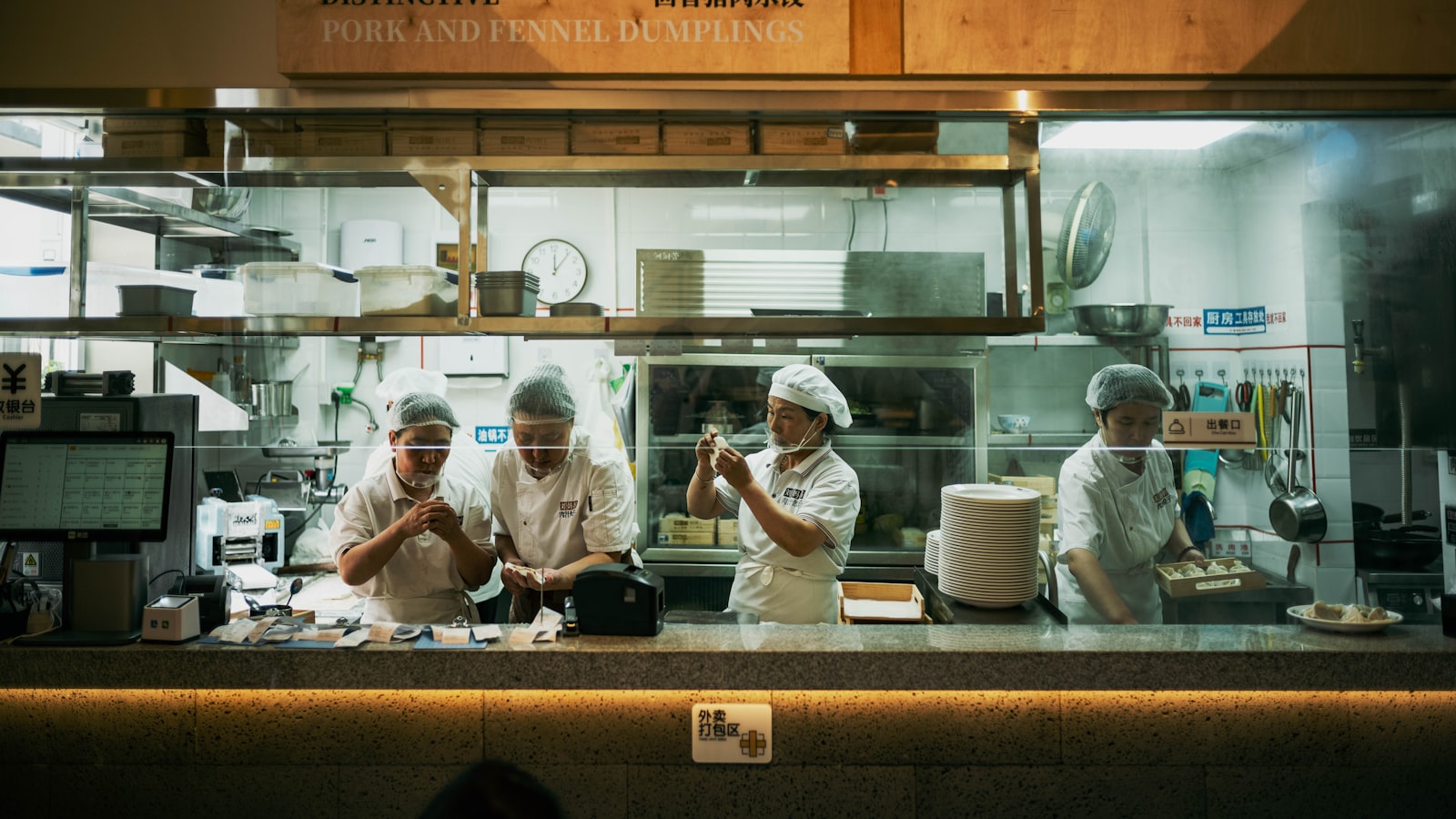
Photo by tommao wang on Unsplash
Somebody has suggested trust falls. Or a ropes course. Or a mandatory Sunday afternoon at a bowling alley that half the crew has to give up their only day off to attend. The intention is good and the result is almost always the same: people show up because they feel they have to, stand around in two separate clumps, and go home no closer than they were.
Real restaurant team building looks nothing like that. It happens on the clock, in the middle of the work, and it comes from the conditions you create rather than the activities you schedule. A crew that trusts each other on a packed Friday was not built at a bowling alley. It was built by clear standards, honest scheduling, and a manager who backed them when it mattered.
This is what actually bonds a restaurant team, the ideas worth running, and how to do it without closing the doors or asking anyone to give up a day off.
Why Most Restaurant Team Building Fails
The standard corporate playbook was designed for people who sit in the same office 40 hours a week and rarely need each other under pressure. A restaurant is the opposite. Your crew already spends every shift in close quarters, physically dependent on one another, at speed. They do not need an icebreaker. They need the friction taken out of the work.
Three things sink most team building attempts in this industry:
- It costs people their own time. Asking a server who worked a double on Saturday to show up unpaid on Sunday is not a gift. It reads as one more thing the restaurant is taking.
- It's disconnected from the work. Bonding over mini golf does not help when the printer jams and there are 14 tickets hanging. Bonding over how you handle 14 tickets does.
- It papers over the real problem. If the crew is fractured because scheduling is unfair or one manager plays favorites, no activity fixes it. Everyone in the room knows what the actual issue is, and the event just makes management look out of touch.
That last one matters most. Team building is reinforcement for a healthy operation. It is not a repair kit for a broken one.
"A crew doesn't bond because you bought them bowling. They bond because they trust each other not to leave them hanging on a Friday night."
What Actually Builds a Restaurant Team
Before any activity, get the conditions right. These are the things that make a group of individuals start behaving like a unit:
Shared standards, written down. Nothing divides a crew faster than a standard that changes depending on who's working. When the recipe, the setup, and the closing routine are documented and identical for everyone, arguments stop being personal. Your standard operating procedures are a culture document whether you think of them that way or not.
Competence. People bond with coworkers they respect, and respect in a kitchen is earned by being good. Undertrained staff drag the shift down and everyone feels it. Serious restaurant staff training is team building, because it removes the resentment that builds when one person is constantly covering for another.
A schedule people can plan a life around. Predictability is respect. Posting the schedule late, changing it without a conversation, or handing the good shifts to the same two people is corrosive in a way no event overcomes.
Someone who takes the hit. When a manager absorbs a guest complaint instead of throwing a server under the bus, the whole floor watches and remembers. That single behavior builds more loyalty than a year of activities. It's one of the core restaurant leadership habits that separates a crew that stays from one that churns.
A real welcome. The first week decides how connected someone feels for the next year. A structured onboarding process and an actual introduction to the crew beats being handed an apron and pointed at a station.
The crew holds together whether you’re there or not.
The whole operation in one place, built around the way your restaurant already works. Money stops leaking, your time stops disappearing into follow-up, and every shift leaves a record with a name on it.
10 Team Building Ideas That Fit a Real Schedule
Now the activities. Every one of these fits inside a normal operating week, uses time you already pay for or people already spend in the building, and connects to work the crew genuinely cares about.
| Idea | When it runs | What it actually builds |
|---|---|---|
| Real family meal before service | Daily or a few times a week | The single highest-return ritual there is. Everyone eats the same thing at the same table before the pressure starts. |
| Cook-led pre-shift skill share | 5 minutes, daily | One person teaches one thing. Builds respect for each other's expertise and raises the floor at the same time. |
| Staff tasting where cooks present | Monthly or with each menu change | Cooks explain their own dish to the floor. Servers sell better, cooks feel seen, and the menu stops being a mystery. |
| Specials or cocktail competition | Monthly | Creative ownership. The winning item goes on the menu with the creator's name on it. |
| Cross-shadowing FOH and BOH | One slow shift per person, quarterly | Kills the "they don't get it" divide faster than anything else on this list. |
| Station rotation on slow nights | Weekly, low volume only | Depth on the schedule plus a crew that can genuinely help each other when it gets deep. |
| The shift shoutout | End of every shift, 60 seconds | One specific save gets named out loud. Costs nothing, compounds enormously. |
| Standing hangout on the deadest night | Weekly, optional, after close | Voluntary and predictable. The optional part is what makes people come. |
| Farm, brewery, or purveyor visit | Twice a year, paid | Product knowledge and a shared experience. Paid attendance is what separates this from an imposition. |
| A staff meal out, on the house | Twice a year, closed day | The one traditional outing worth doing. Sit them at one table and pick up the check. |
Notice what's missing: nothing on that list requires personal disclosure, physical embarrassment, or a personality test. Restaurant people bond over craft, food, and shared war stories. Build around that and the cheesiness problem solves itself.
How to Run Them Without Closing for a Day
The constraint every operator hits is time. You cannot close on a Saturday and you cannot ask people to donate their weekend. So use the time that already exists:
- Pre-shift is your meeting. Ten minutes with everyone in the same room, every day, is more contact time than most offices get in a month. Teach one thing, name one win, flag one focus. Protect it like service.
- Family meal is your table. If your family meal has quietly become "grab something standing at the pass," you've lost the most valuable 20 minutes of the day. Sit down. Same food, same table.
- Slow nights are your training ground. Rotation, cross-shadowing, and skill shares belong on a Tuesday, not a Friday. You get the development without risking service.
- Pay for anything outside the schedule. If you're asking for someone's day off, it's a shift. Treat it like one. This single rule is what separates a perk from a resented obligation.
- Write down what happened. A crew that doesn't know how last night went can't build on it. A consistent shift report gives the next team the story instead of the guesswork.
Getting Front and Back of House on the Same Side
The oldest divide in the building, and the one team building is most often thrown at. It rarely works, because the split is not really about personality. It's about information.
Servers push a dish they don't understand. Cooks get hit with modifications nobody warned them about. The floor doesn't know the kitchen is short a cook; the kitchen doesn't know there's a 12-top with an allergy walking in at 7:30. Each side fills the gap with the worst possible assumption about the other.
The structural fixes are simple and they work: brief both sides on the same menu information at the same time, have servers stage in the kitchen and cooks work expo, and give one person clear ownership of the pass during peak so communication has a home. Shared context does more in a week than any icebreaker does in a year.
How to Tell If It's Working
Team building has a reputation as a soft investment, but the signals are concrete if you know where to look. Watch for these:
- People cover for each other unprompted. A cook helps plate a station that isn't theirs without being asked. That's the whole thing, right there.
- Referrals go up. When your crew starts recommending their friends, they're telling you the job is good. It's the cheapest hiring channel you have and the most honest culture survey you'll ever run.
- Fewer no-shows and late calls. People don't leave a team hanging when they feel like part of one.
- Turnover slows. Restaurant churn runs high across the industry, as the Bureau of Labor Statistics job openings and turnover data shows year after year. Moving your own number even slightly is worth real money. If yours is running hot, start with why restaurant staff turnover is so high.
- Problems surface early. A connected crew tells you about the walk-in going warm at 4pm instead of at 8pm when the product is gone.
None of that comes from an activity in isolation. It comes from a well-run operation with a few genuine traditions on top of it. For the wider system that holds it all together, our guide on how to run a restaurant covers the operational side, and the manager skills piece covers the person holding it. Industry context and benchmarks are worth checking against the National Restaurant Association's industry research too.
If you want your crew spending its energy on the work instead of hunting for the right answer, Crewli builds a custom operations app that keeps standards, prep, and shift handoffs in one place. Let's talk.
Frequently Asked Questions
What is restaurant team building?
Restaurant team building is everything you do to get a crew working as one unit instead of a group of individuals covering their own station. In practice that is far less about scheduled activities and far more about the conditions you create day to day: clear standards so nobody is guessing, fair scheduling so nobody feels used, cross-training so people can actually help each other, and a manager who backs the team in front of guests. Events can reinforce a good culture. They cannot create one.
What are good restaurant team building activities?
The ones that fit a restaurant schedule and use skills the crew already cares about. A real family meal before service, a staff tasting where cooks present their own dish, a friendly cocktail or special competition, cross-shadowing between front and back of house, a pre-shift where one person teaches a 5-minute skill, and an after-shift standing hangout on the slowest night. Skip anything that requires closing the restaurant, unpaid weekend attendance, or forced personal sharing. Those breed resentment instead of trust.
How often should you do restaurant team building?
Small and constant beats big and rare. A daily pre-shift, a weekly family meal, and one monthly event you actually keep is a better rhythm than a single elaborate outing twice a year. Consistency matters more than scale, because the point is to build a habit of talking to each other. The fastest way to kill team building is to announce a monthly tradition, run it twice, then quietly drop it when the schedule gets tight. Pick a cadence you can hold in your busiest month.
Does team building actually reduce restaurant turnover?
The activities alone do not. The conditions behind them do. People rarely quit because there was no bowling night; they quit over unclear expectations, a manager who plays favorites, a schedule that changes without warning, or a training process that left them feeling stupid. Fix those and turnover moves. Team building helps by making the crew feel like they belong to something, which raises the cost of leaving. Treat it as reinforcement for a healthy operation, not a substitute for one.
How do you build team culture without closing the restaurant?
Use the time you already pay for. Pre-shift is the single most underused team building tool in the building: 10 minutes, everyone in the same room, one skill taught and one win named. Family meal is the second. Beyond that, run competitions inside service, rotate people through stations on slow shifts, and put the shift's story in a written handoff so the next crew starts informed. None of that costs a closed night, and all of it compounds week over week.
How do you get front of house and back of house to stop fighting?
Most front and back of house friction is an information problem wearing an attitude costume. Servers push what they do not understand, cooks get hit with modifications nobody warned them about, and each side assumes the other is careless. Fix it structurally: brief both sides together on the same menu information, have servers stage in the kitchen and cooks work an expo shift, and give one manager ownership of the pass during peak. Shared context does more than any icebreaker.