
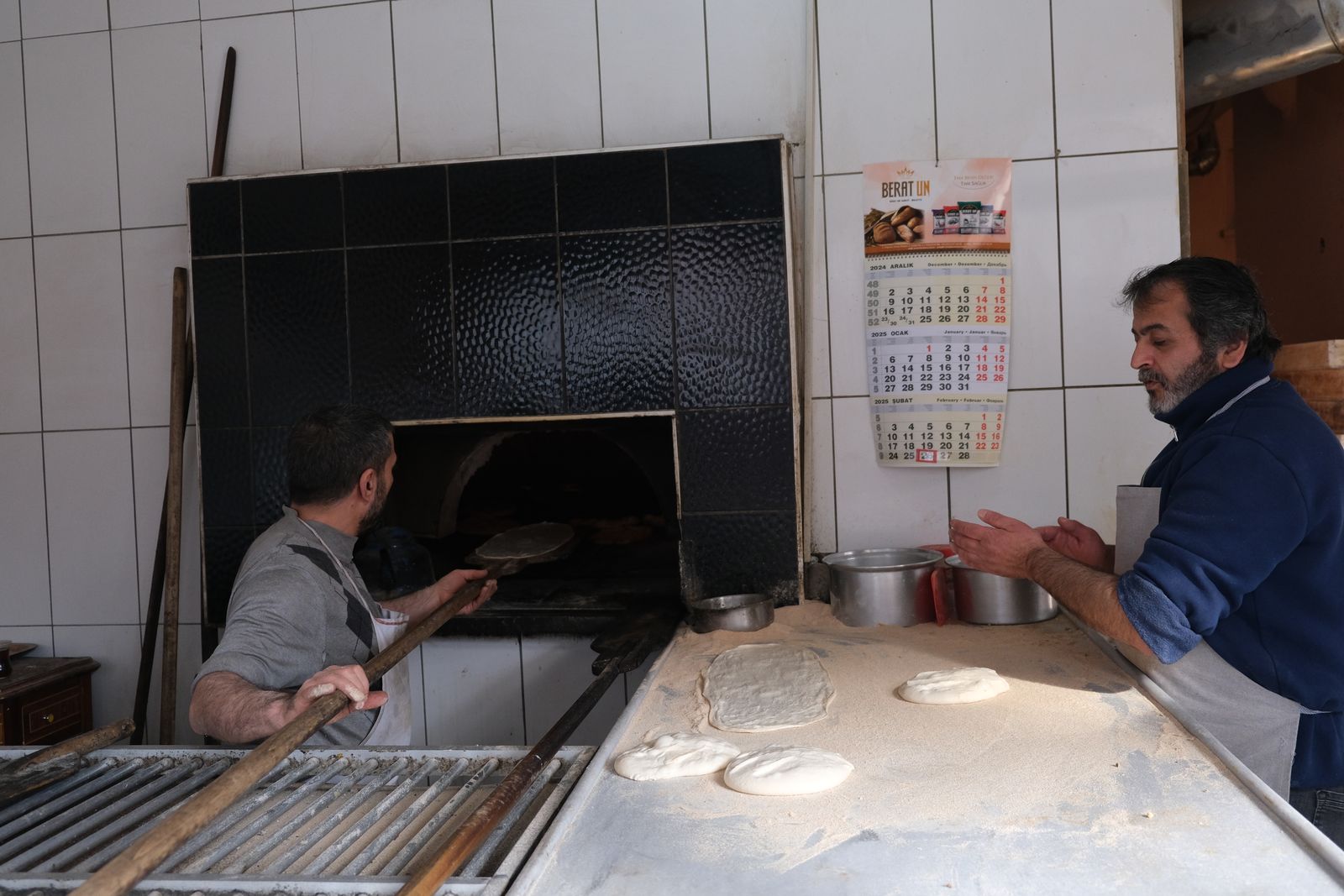
Photo by Şüheda Yassıkaya on Pexels
A restaurant mostly cooks to order. A bakery commits to the day's production hours before it knows what will sell. You mix, proof, and bake against a forecast, and by the time the doors open the decisions are already in the oven. That single fact is what makes a bakery hard to run, and it's why the production schedule is the beating heart of the whole operation.
Strong bakery operations come down to producing the right amount of the right things at the right time, day after day, whether or not the owner is standing at the bench. Get the schedule and the systems around it right and the shelves are full, the waste is low, and the 4 a.m. scramble turns into a routine. Get them wrong and you're either selling out by 10 or throwing product in the bin at close, sometimes both in the same week.
This guide breaks down how to run a bakery on a plan: how to build a production schedule that works backward from open, the six systems every bakery needs, how to hold par levels and cut waste, and where a good operations system takes the pressure off. Along the way we'll point out exactly where our own operations app does the heavy lifting, because most of this stops living in one baker's head the moment it lives somewhere the whole team can see it.
Why the Production Schedule Runs the Bakery
In most kitchens, the prep list is a supporting document. In a bakery, the production schedule is the whole game. Baking runs on long, unforgiving timelines. Mixing, bulk fermentation, shaping, proofing, baking, and cooling each take the time they take, and you can't compress them because a line formed at the register. If a laminated dough needs to rest overnight, no amount of hustle makes it ready by lunch.
That means a bakery has to decide its production ahead of demand and then hit those numbers. A production schedule is how you make that decision on purpose instead of by reflex. It says what gets made, how much, in what order, and by when, so that the first croissant and the last baguette both come out when they're supposed to, and the person running the bench doesn't have to hold the entire day in their head.
The bakeries that struggle are almost always the ones running on a lead baker's memory. It works right up until that baker is sick, quits, or takes a vacation, and then the whole operation wobbles because the plan was never written down. A production schedule that lives on paper or in a shared app is what turns a bakery from a personality into a system, and it's the same principle that underpins writing standard operating procedures in any food business: what lives only in one head isn't a system, it's a risk.
How to Build a Production Schedule That Works Backward
Every good production schedule is built in reverse. You don't start with "what should we make this morning." You start with "what needs to be on the shelf, and when," and work back from there through every step that stands between raw ingredients and a finished product.
Here's the sequence that turns a wish list into a schedule:
- Set target quantities per item. Pull from sales history and your par levels, adjusted for the day of week and anything special. A Saturday number and a Tuesday number are rarely the same.
- Subtract carryover. Anything with shelf life that survives to the next day reduces what you need to produce. Be honest here, or you'll overproduce.
- Map each item's timeline. For every product, note cool time, bake time, proof time, and mix time. That total is its lead time.
- Work back from ready-by. Ready-by minus cool minus bake minus proof minus mix gives you the clock time each step must start.
- Batch and sequence. Group items that share a mix, a proof temperature, or an oven load, and order everything so the oven and the mixer are never idle and never double-booked.
Laid out as a simple grid, a day's schedule reads at a glance. Here's a stripped-down example of what that looks like for a morning service.
| Item | Target qty | Mix | Shape / proof | Bake | Ready by |
|---|---|---|---|---|---|
| Baguettes | 40 | Prev. day PM | Overnight cold proof | 5:00 AM | 6:15 AM |
| Croissants | 60 | Prev. day (laminate) | 4:00 AM proof | 6:00 AM | 6:45 AM |
| Muffins | 36 | 5:15 AM | — | 5:45 AM | 6:30 AM |
| Sourdough loaves | 24 | Prev. day PM | Overnight cold proof | 6:15 AM | 7:45 AM |
| Cookies (par bake) | 48 | Batched, frozen | — | As needed | Rolling |
Notice how much of the work happens the day before. Shifting long-ferment items to an overnight cold proof pulls labor out of the middle of the night and smooths the morning. That's a scheduling decision, not a recipe decision, and it's exactly the kind of thing a written schedule lets you see and optimize.
Prep List
Your production schedule becomes a daily prep checklist your whole kitchen team works through before service, right on their phones. Everyone sees what needs to be made and in what order, nothing gets missed, and the plan doesn't vanish when your lead baker is off. It's the production schedule above, living where the team actually works instead of on a flour-dusted clipboard.
The production schedule holds whether you’re there or not.
The whole operation in one place, built around the way your restaurant already works. Money stops leaking, your time stops disappearing into follow-up, and every shift leaves a record with a name on it.
The Six Systems Every Bakery Needs
A production schedule doesn't run on its own. It sits on top of a small stack of systems, and when any one of them is missing, the schedule starts to slip. These six are the foundation of tight bakery operations, and none of them requires expensive software to begin.
| System | What it does | What it prevents |
|---|---|---|
| Production schedule | Says what to make, how much, and when | The daily scramble and empty shelves at open |
| Standardized recipes | Locks every batch to the same weights and method | Product that changes with whoever mixed it |
| Par levels | Sets target quantities for product and ingredients | Overproduction, waste, and running short |
| Prep & mixing checklist | The step-by-step before the oven | Missed components and half-finished mixes |
| Ordering system | Ties ingredient pars to what you buy | Mixing a batch and finding you're out of butter |
| Open & close routines | Resets the bakery every day | Cold ovens, cases not faced, temps not logged |
Two of these deserve a closer look because they're where bakeries lose the most money quietly: par levels, which control waste, and standardized recipes, which control consistency. We'll take each in turn. But first, the ordering system, because it's the one that most often gets run on a sticky note.
Ordering in a bakery is unforgiving in a specific way: you can't finish a mix you started short. If the recipe calls for 40 pounds of flour and there are 30 in the bin, the batch stops. Tying your ordering directly to your ingredient par levels, and putting the request somewhere a manager actually sees it, is how you stop discovering shortages at the worst possible moment.
Order Sheet & Order History
Your team submits supply requests straight through the app instead of scrawling them on a whiteboard, so ordering stays organized and managers stay in the loop without the back-and-forth. Order History keeps a running record item by item, which is how you spot over-ordering, catch the flour usage creeping up, and buy smarter next week instead of guessing.
Par Levels and Cutting Waste
Waste is the tax a bakery pays for guessing. And because baked goods have short shelf lives, that tax is higher here than almost anywhere else in food service. Every unsold loaf at close is ingredients, labor, and oven time you already spent, walking out the door as a loss.
Bakery waste comes from exactly two sources, and each has its own fix:
- Overproduction. You made more than sold. The fix is par levels set from real sales data, adjusted by day of week, not a round number someone picked years ago. If your Tuesday and Saturday pars are the same, one of them is wrong.
- Spoilage. You made the right amount but lost it to staleness or poor rotation. The fix is tight FIFO rotation, honest shelf-life labeling, and a real plan for day-old product: a discount rack, staff meal, or a donation partner.
The single most useful exercise is to track what gets thrown out for two weeks. Not a vague sense of "we waste too many bagels," but an actual count. Almost every time, the waste concentrates in two or three items whose pars are set too high, and once you see it in numbers, the fix is a five-minute change to next week's schedule.
This is the same margin discipline that drives our deeper look at restaurant food waste, and it connects straight to cost: the tighter your pars, the closer your actual food cost tracks the number you planned for. If you want to nail down what each item actually costs to produce before you set prices, our guide to recipe costing walks through the math.
Standardized Recipes and Consistency
Consistency is the whole promise of a bakery. A regular buys your croissant because it was good last time and they expect it to be good again. The moment it changes because a different baker eyeballed the butter, you've broken the one thing that brings people back.
Baking is chemistry, which makes standardization even more important here than on a hot line. A few percent off on hydration, a slightly different mix time, a proof pulled early, and the product is visibly different. Standardized recipes, written by weight rather than volume, are the only way to get the same result across bakers, shifts, and seasons. Weight matters especially in baking, where a packed cup of flour and a loose cup are two different doughs.
A good recipe system also scales. When you need to run a batch at 1.5 times or double, weighted formulas scale cleanly where volume measures get messy fast. This is exactly what our recipe sheet template is built for, one standardized spec per item with weights, method, yield, and cost on the same page.
Recipes & Converter
Every formula lives in the app with prep guides, methods, and plating standards, so consistency holds no matter who's on the bench. And the built-in weight, volume, and temperature Converter handles the scaling math on the spot, so a baker running a batch at 1.5x isn't doing arithmetic in the middle of a mix. Standards in one place, the math built in.
Standardized recipes are also your fastest training tool. A new baker with clear, weighted formulas is productive in days instead of weeks, and your best baker stops being the only person who knows how anything is made. That's the same logic behind good staff training in any kitchen: train from the written standard, not by shadowing and hoping it sticks.
One note on food safety: temperature logging, storage, and hygiene standards vary by location and are set by your local health department. Build the habit of logging and storing to a fixed routine, keep those records somewhere durable, and confirm the specific rules and intervals for your bakery with your local authorities. General resources like the National Restaurant Association are a reasonable starting point for operational guidance.
The Daily Bakery Production Checklist
Here's a starting checklist that pulls the day together, from the pre-dawn open through close. Tick it off on this page and hit Save as PDF to print a clean copy, or use it as the skeleton for your own. It's a template, not a complete or compliance list, so add the items your bakery needs on the blank lines.
Daily Bakery Production Checklist
This is a starting template built from how well-run bakeries operate, not a complete or compliance checklist. Every bakery and jurisdiction is different. Use the blank lines to add your own tasks, and confirm food-safety and storage requirements with your local health department.
Open & setup
Mixing & production
Front case & service
Close & reset
A checklist like this is exactly what our daily operations checklist covers for full-service restaurants, and the bakery version follows the same logic: a written routine, a named owner, and a manager who reviews it.
Opening Checklist & Closeout Tasks
Opening station checks and end-of-night closeout run right in the app, built around your bakery, so nothing gets skipped and every task is timestamped and signed off. On the management side, you review the closeout submissions each night and see exactly what was completed, what was missed, and who did it, without standing over anyone's shoulder.
Run a bakery and want the production schedule, recipes, prep lists, ordering, and close all living in one place your team can actually see, so the operation runs to plan without you at the bench before dawn? That's exactly what we build. Let's talk about what it would look like in your bakery.
Frequently Asked Questions
What is a bakery production schedule?
A bakery production schedule is the written plan that says what gets made, in what quantity, in what order, and by when, for a given day or week. It works backward from when product needs to be ready, accounting for the long lead times baking involves: mixing, bulk fermentation, proofing, baking, and cooling all happen on a clock you can't rush. A good schedule turns a bakery from a place that reacts to what sold out into one that produces to a plan, which is the difference between consistent shelves and a daily scramble.
How do you plan production in a bakery?
Start from your sales history and your par levels, then work backward through the timeline each item needs. Decide your target quantities per item, subtract what you can carry over, and schedule mixing and shaping so everything hits the oven in the right sequence and comes out when it's needed. Batch items that share a mix, a proof temperature, or an oven load. The goal is a sequence a baker can follow without guessing, so the same production comes out whether your lead baker is in or not.
How do bakeries reduce waste?
Bakery waste comes from two places: overproduction and spoilage. Attack overproduction by setting par levels from real sales data rather than gut feel, and adjusting them by day of week, because a Saturday par and a Tuesday par should not be the same number. Attack spoilage with tight rotation, honest shelf-life labeling, and a plan for day-old product, whether that's a discount rack, staff meal, or donation. Track what gets thrown out for a couple of weeks and the pattern usually points straight at the two or three items whose pars are set too high.
What time do bakeries start production?
It depends on the product and whether you use any overnight methods, but most retail bakeries begin baking in the very early morning so fresh product is ready when the doors open. Long-fermented items are often mixed the day before and cold-proofed overnight to shift labor out of the small hours. The exact start time falls out of your production schedule: you work backward from open, subtract bake and cool time, subtract proof, subtract mix, and that math tells you when the first baker clocks in.
How do you manage inventory in a bakery?
Bakery inventory splits into ingredients and finished product, and each needs its own habit. For ingredients, set par levels on flour, butter, sugar, and everything else, count on a fixed schedule, and order to par so you never mix a batch and discover you're short. For finished product, track what's made against what sells so your production schedule stays honest. Standardized recipes with weights are the backbone of both, because you can't forecast what you need to buy if every baker uses a slightly different amount.
How is running a bakery different from running a restaurant?
The biggest difference is lead time and forecasting. A restaurant largely cooks to order, so demand and production happen close together. A bakery produces ahead of demand on long, unforgiving timelines, so you're committing to quantities hours before you know what will actually sell. That makes the production schedule and accurate par levels far more central to a bakery than to most restaurants. Many operational fundamentals carry over, like standardized recipes, prep lists, and inventory discipline, but a bakery lives or dies on producing the right amount to a plan.
What systems does a small bakery need to run smoothly?
Six: a production schedule that says what to make and when, standardized recipes so every batch is the same, par levels that set your target quantities, a prep and mixing checklist so nothing gets missed before the oven, an ordering system tied to your ingredient pars, and opening and closing routines that reset the bakery each day. None of these require expensive software to start, but as a bakery grows, putting them in one place your whole team can see, rather than in one baker's head, is what lets the operation run without the owner in the building at 4 a.m.